I’ve reviewed thousands of casting quotes over the years, and the most common budgeting mistake I see is treating the per-kilogram material price as “the cost.” A procurement team gets a quote showing gray iron at $1.27/kg and builds a budget around it. Then tooling, machining, inspection, and freight arrive — and the actual per-part cost is two to three times that number. Material typically accounts for 40-60% of the total. The rest is labor, tooling amortization, finishing, and overhead that never appears in a raw material price list.
What you’ll actually pay requires looking at the full cost stack, not just the metal.
What Makes Up the Cost of a Green Sand Casting
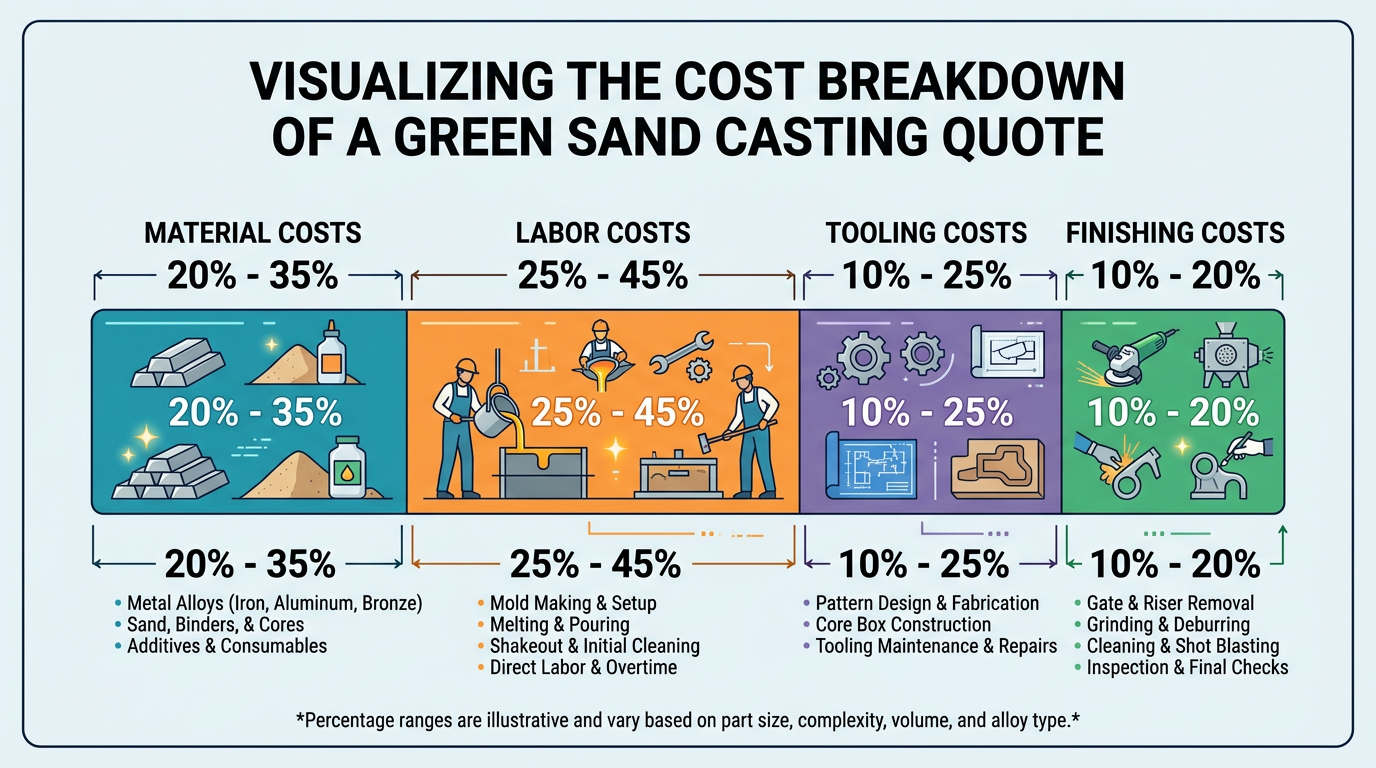
Every green sand casting quote, whether the foundry breaks it out or not, contains the same core cost components.
The typical breakdown runs roughly: material at 40-60% of total cost, labor and overhead at 20-35%, tooling amortization at 5-15%, and finishing or secondary operations at 10-25%. Those ranges shift depending on part complexity, volume, and alloy — but the structure holds across most jobs.
Material
Material cost is driven by alloy choice, part weight, and yield. Gray iron is the lowest-cost casting alloy, typically running well under half the price of stainless steel per pound. Ductile iron sits slightly above gray iron but offers much stronger mechanical properties for the premium.
The number most buyers overlook is yield. A typical green sand casting process converts only 50-70% of the metal poured into finished parts. The rest goes to gates, risers, and scrap. A 12% material loss is considered very good — many jobs run 30-50% loss. That means your material cost per finished part is well above the raw alloy price.
Labor and Overhead
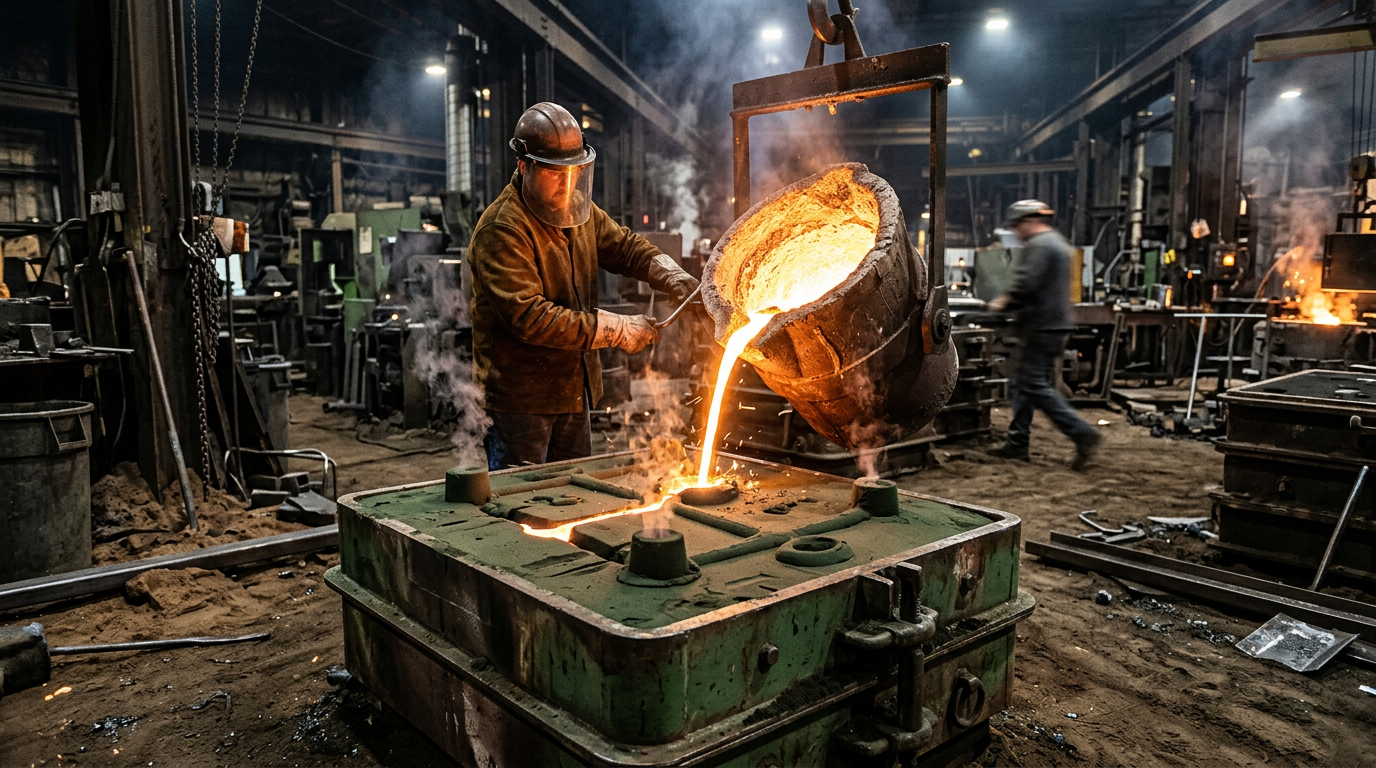
Molding, pouring, shakeout, cleaning, and inspection all require skilled labor. Manual mold preparation runs $20-50 per hour depending on region and shop capability. For a domestic U.S. foundry, labor rates run two to three times higher than offshore quotes reflect, but the trade-off is shorter lead times, easier communication, and lower logistics cost.
Overhead — energy, sand reclamation, environmental compliance, quality systems — typically gets rolled into the shop rate rather than quoted as a line item. Ask your foundry how they allocate overhead if the quote seems opaque.
Tooling Amortization
Tooling is a non-recurring engineering (NRE) cost that gets spread across your production volume. Patterns range from $500 for a simple wood pattern to $7,500+ for a complex metal match plate. Core boxes add $1,000-10,000 depending on geometry. A complete mold package for a moderately complex part can run $6,000-20,000.
Here is the critical math most buyers skip: divide your total tooling cost by your expected lifetime volume. On a 5,000-piece run, a $10,000 pattern adds $2 per part. On a 200-piece run, that same pattern adds $50 per part. Tooling amortization is often the single biggest variable in per-unit cost for low-volume work.
One more thing to budget for: tool costs can vary by 70%+ across their lifespan. Pattern repairs, design modifications, and storage fees accumulate. The number on your initial quote is the starting point, not the total.
Secondary Operations and Finishing
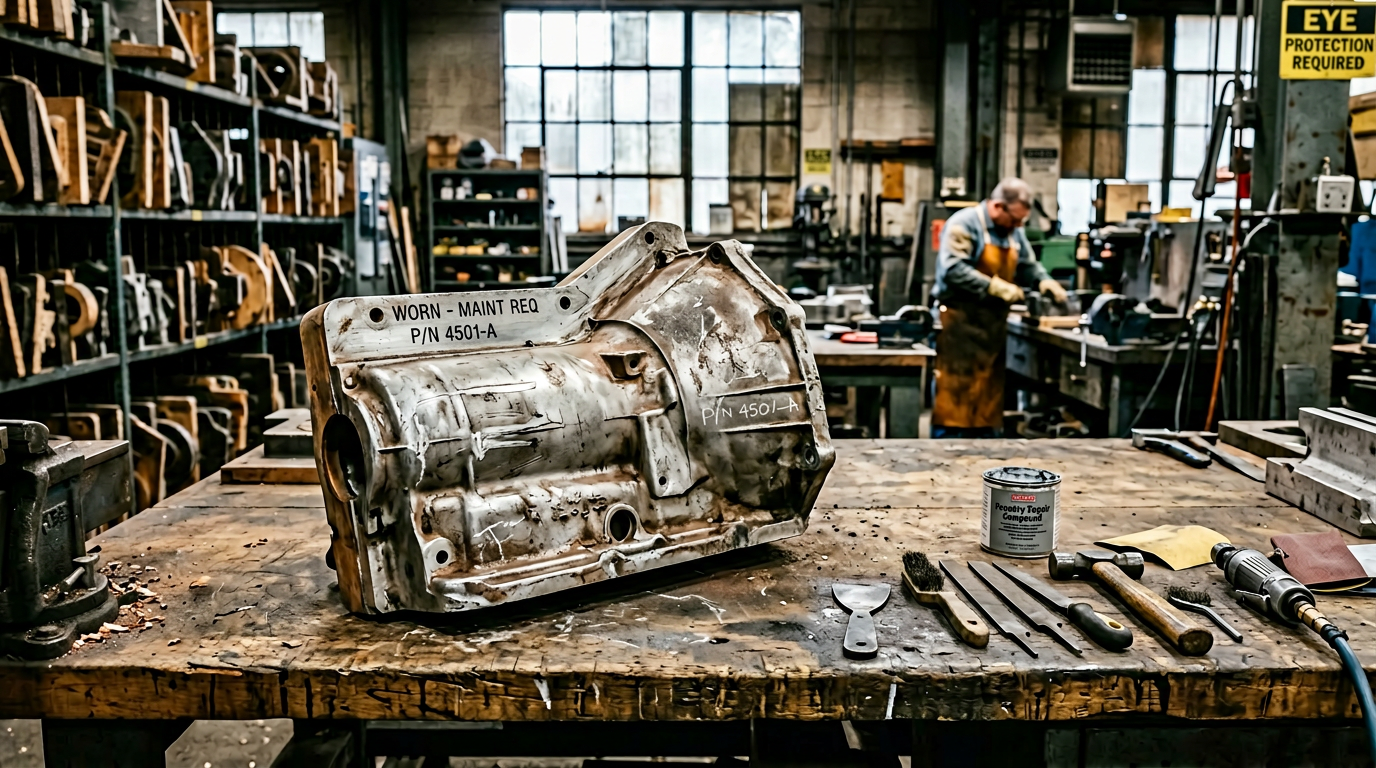
This is where budgets blow up. A raw green sand casting needs, at minimum, gate removal and cleaning. Most applications also require some machining. The cost impact is dramatic: gray iron castings that cost $1.27/kg as-cast jump to $1.59/kg with simple machining — a 25% increase. Precision machining pushes that to $2.23/kg, a 76% increase over the raw casting price.
When you factor in the total landed cost, secondary operations often exceed the casting cost itself. Heat treatment, painting, plating, and assembly are all additional. Budget for them explicitly rather than treating them as rounding errors.
How Part Size, Complexity, and Volume Affect Price
Part Weight and Geometry
Heavier parts cost more in absolute terms but less per pound, because the fixed costs (molding, handling, inspection) get distributed across more material. A large casting costs roughly a third to half as much per pound as a small one of similar complexity.
Complexity drives cost through two mechanisms: it increases pattern cost (more cores, tighter draft angles, split patterns) and it increases scrap rate. Internal cavities requiring cores add both tooling and labor. Every core is a potential defect source — misalignment, gas porosity, sand inclusions. Simpler geometry doesn’t just cost less to tool; it yields more good parts per pour.
Volume Breakpoints
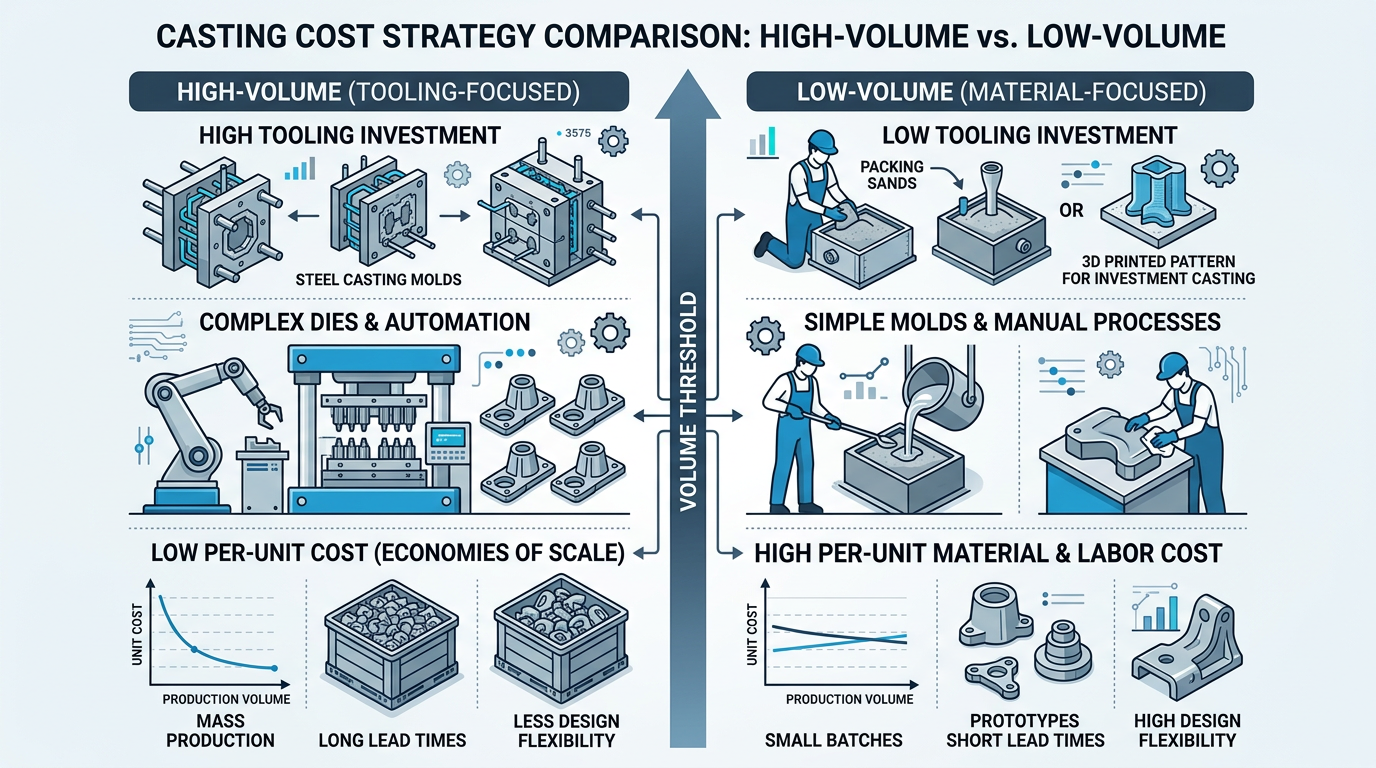
Volume changes what you should focus on. At high volume (1,000+ pieces annually), tooling cost becomes negligible per unit and material reduction is your highest-impact move — lighter designs, better gating for higher yield, alloy selection. Ductile iron castings often hit the sweet spot here, offering steel-like strength at iron pricing.
At low volume (under 200 pieces), tooling dominates your per-unit cost. The strategy inverts completely: simplify the pattern, accept secondary machining instead of complex cores, and consider splitting the casting into simpler pieces that can be welded or assembled later. I’ve seen procurement teams save 20% on piece price and lose 40% on rework because they focused on the wrong variable for their volume.
For very low volume (under 50 pieces), 3D-printed sand molds can eliminate traditional tooling entirely. One manufacturer producing 200-300 aluminum brackets annually cut per-part cost from $420 to $252 by replacing an $18,000 pattern set with $450 in 3D-printed molds. Lead time dropped from eight weeks to 10 days.
Tooling and Pattern Costs
Wood patterns are the entry point at $3,000-8,000 for typical parts. They wear faster and limit production speed but make economic sense for runs under a few hundred pieces. Metal patterns cost $15,000+ but last for thousands of cycles and enable automated molding.
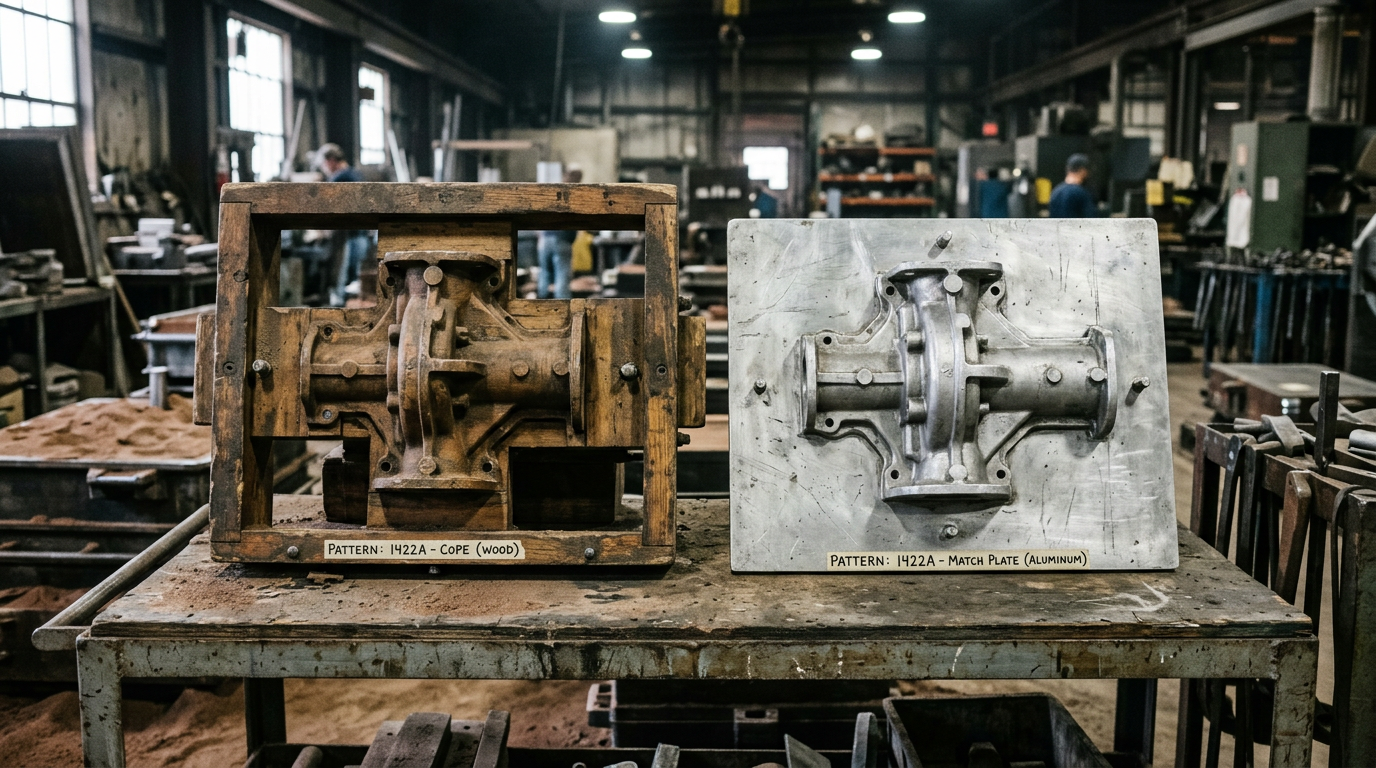
The question isn’t cast vs. fabricated — it’s what does your volume justify. A $15,000 metal pattern that runs 10,000 parts adds $1.50 per unit. The same investment on a 300-piece job adds $50. For that short run, a wood pattern at $4,000 adds $13 per part — still significant, but manageable.
Core boxes are the hidden multiplier. Parts with internal passages or hollow sections need cores, and each core design requires its own tooling. A part with three core prints might need $5,000-15,000 in core tooling on top of the pattern cost. Before you RFQ, define your quality requirements on paper — and question whether every cored feature is truly necessary or whether post-cast machining could achieve the same result at lower total cost.
When Green Sand Casting Is Not the Cheapest Option
Green sand casting wins on cost within a specific envelope: moderate tolerances, medium-to-high volume, and parts that don’t require extensive post-cast machining. Outside that envelope, the economics shift.
Standard green sand tolerances run around +/- 0.070″ for small dimensions. If your part needs +/- 0.005″, you’ll machine every critical surface. If that casting requires three hours of secondary machining to hold tolerance, the “cheap” process isn’t cheap anymore. Gray iron castings are the most machinable option, but even excellent machinability doesn’t eliminate the labor cost of extensive secondary operations.
At around 500 or more units requiring tight tolerances, investment casting starts to compete on total cost. The tooling is more expensive ($6,000-15,000 vs. $2,000-5,000 for sand), but per-unit machining drops sharply because investment castings come closer to net shape. The crossover point depends on how much machining your sand casting requires — I run the comparison on every project where tolerance specs suggest more than 30 minutes of CNC time per part.
For very large parts (500+ lbs) or very small runs of simple geometry, no-bake sand casting or even fabrication may beat green sand on total cost.
How to Get an Accurate Quote
The single highest-impact thing you can do to reduce casting cost is submit a complete RFQ. Vague specifications generate inflated quotes because foundries build risk premiums into every unknown. Specify the alloy grade, dimensional tolerances for each feature, surface finish requirements, annual volume and lot sizes, inspection requirements, and delivery schedule.
Get quotes on a total landed cost basis, not piece price. Ask suppliers to break out tooling amortization, secondary operations, and inspection separately. When two quotes look similar on piece price but one includes machining and the other doesn’t, you’re not comparing the same thing.
Request tooling ownership terms upfront. If you’re paying for patterns, confirm they’re yours and factor in storage costs at the foundry. Pattern storage fees add up over a product lifecycle, and that ongoing cost never appears on the initial quote. The best procurement outcomes I’ve seen come from teams that treat the RFQ as an engineering document, not a purchasing form.