I pull dry sand castings off the line every week that could have been green sand jobs. The tolerance table on the drawing says +/-0.030 inches, the engineer sees green sand listed at +/-0.060, and the purchase order goes to a dry sand shop at twice the mold cost. But that +/-0.060 number is the typical range, not the achievable range — and the gap between those two numbers is where most over-specification happens.
What Actually Differs Between Green Sand and Dry Sand Molds
Green sand molds contain moisture — the name comes from the same sense as “green wood,” meaning uncured. Water activates bentonite clay to bond sand grains, and the mold holds shape just long enough for the pour. A modern automated green sand line produces over 300 molds per hour with near-total sand reclamation.
Dry sand molds use chemical binders — furan, phenolic urethane, or sodium silicate — instead of clay and water. The mold cures either at room temperature (no-bake) or in an oven, producing a rigid cavity that resists metallostatic pressure better than a green sand mold. Curing adds 8 to 48 hours before you can pour.
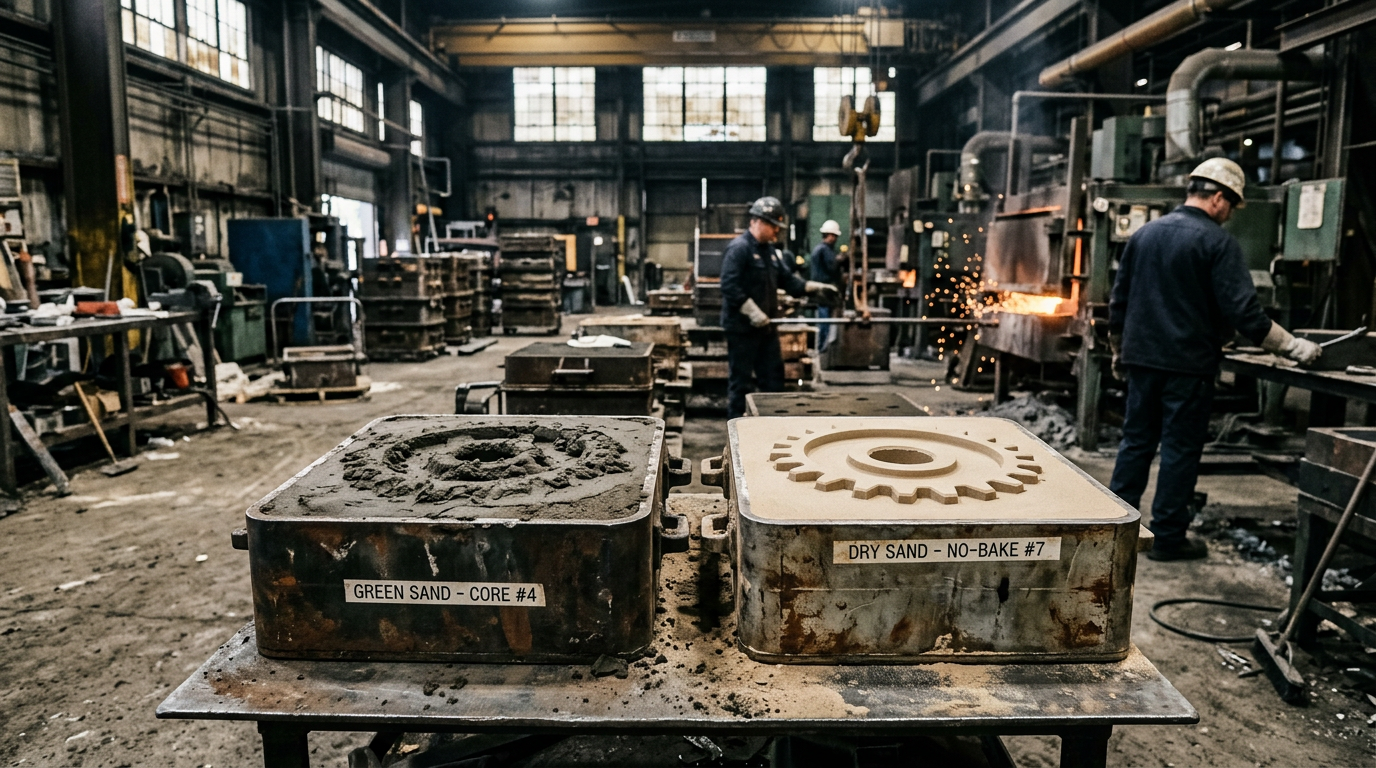
That rigidity is the functional difference. A green sand mold compresses slightly under the weight of molten metal. A dry sand mold holds its shape. For large, heavy castings where metallostatic pressure is high, that rigidity matters. For a 15-pound bracket? It rarely does.
Surface finish tells a similar story. Green sand delivers 250 to 1,000 microinches RMS. Dry sand tightens that to roughly 125 to 250 microinches. But most industrial castings get machined on critical surfaces anyway, erasing any as-cast finish advantage.
How Tolerances Actually Compare
Achievable green sand tolerances are roughly twice as tight as the typical tolerances printed in most reference tables — and that gap is process control, not process limitation.
Most comparison guides cite green sand at +/-1.0 mm (+/-0.040 inches) and dry sand at +/-0.3 to 0.8 mm. Those green sand numbers reflect typical shop performance with average process control. Achievable green sand tolerances with proper tooling and sand system management run +/-0.4 to 0.5 mm (+/-0.016 to 0.020 inches). In special cases, +/-0.03 inches on the first inch is possible at additional cost.
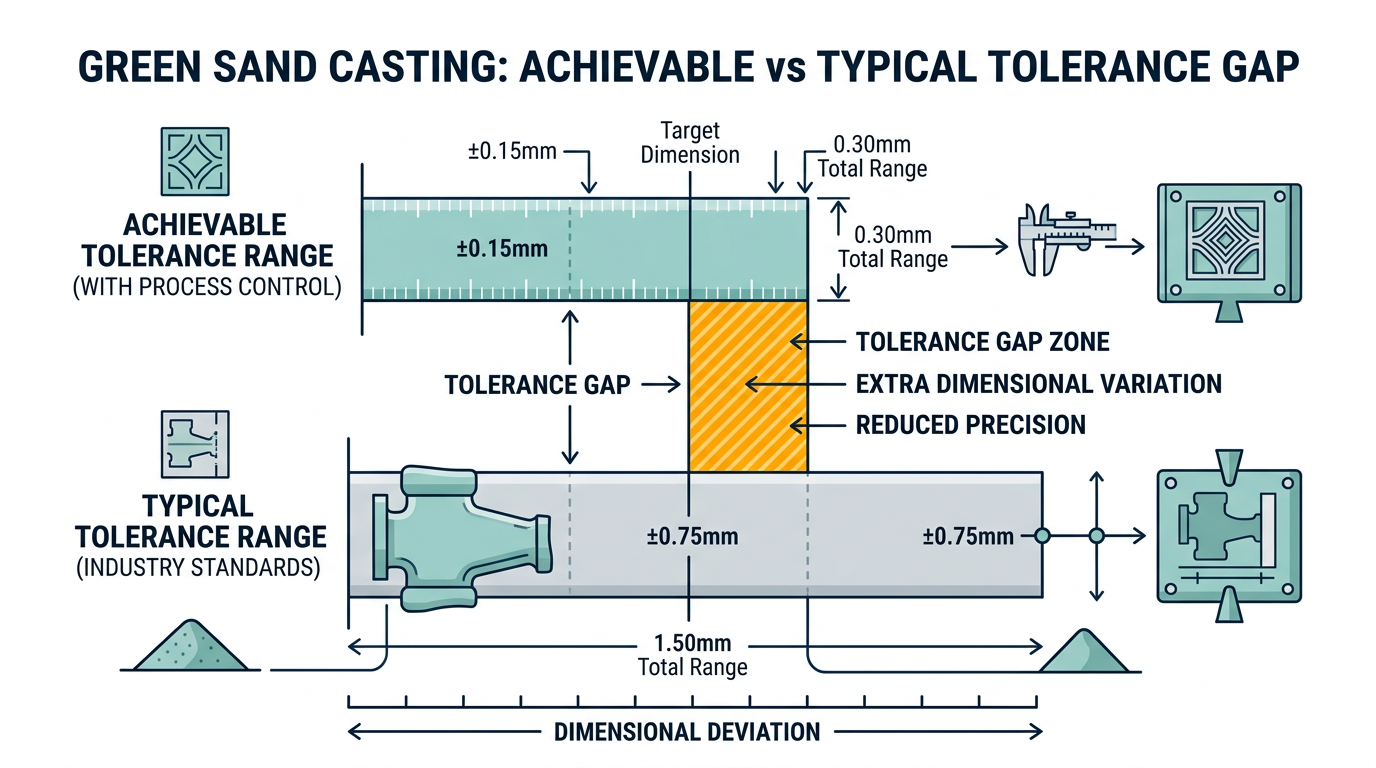
Here is what makes the difference:
- Parting line location. The tightest tolerances apply only to dimensions that lie entirely in one mold half. Dimensions crossing the parting line require greater tolerance regardless of process type. A well-designed pattern puts critical dimensions in a single mold half whenever possible.
- Sand system control. Moisture content, compaction ratio, and grain distribution determine how consistently the mold reproduces the pattern. A shop running automated sand testing and closed-loop moisture control holds tighter numbers than one relying on the operator’s squeeze test.
- Pattern quality. A worn pattern with 0.010 inches of surface degradation cannot produce tight castings in any process. Before you specify dry sand to tighten tolerances, check the pattern first.
The most common mistake I see in new patterns is skipping the trial run. Engineers specify dry sand because they assume green sand cannot hold the tolerance, without ever testing what a decent green sand pattern actually delivers. Run five green sand molds with the production pattern before committing to dry sand.
I leave at least 0.100 inches per side on machined features for green sand castings. That stock covers normal as-cast variation and still costs less than switching to dry sand for dimensions you are going to machine away.
Cost and Lead Time Gap
Dry sand molds cost roughly twice as much per mold as green sand, and the gap compounds at volume.
A green sand line running 300-plus molds per hour amortizes tooling across thousands of parts. Dry sand curing takes 8 to 48 hours per mold. A green sand shop can deliver a 500-piece order in the time a dry sand shop is still curing molds for the first 50.
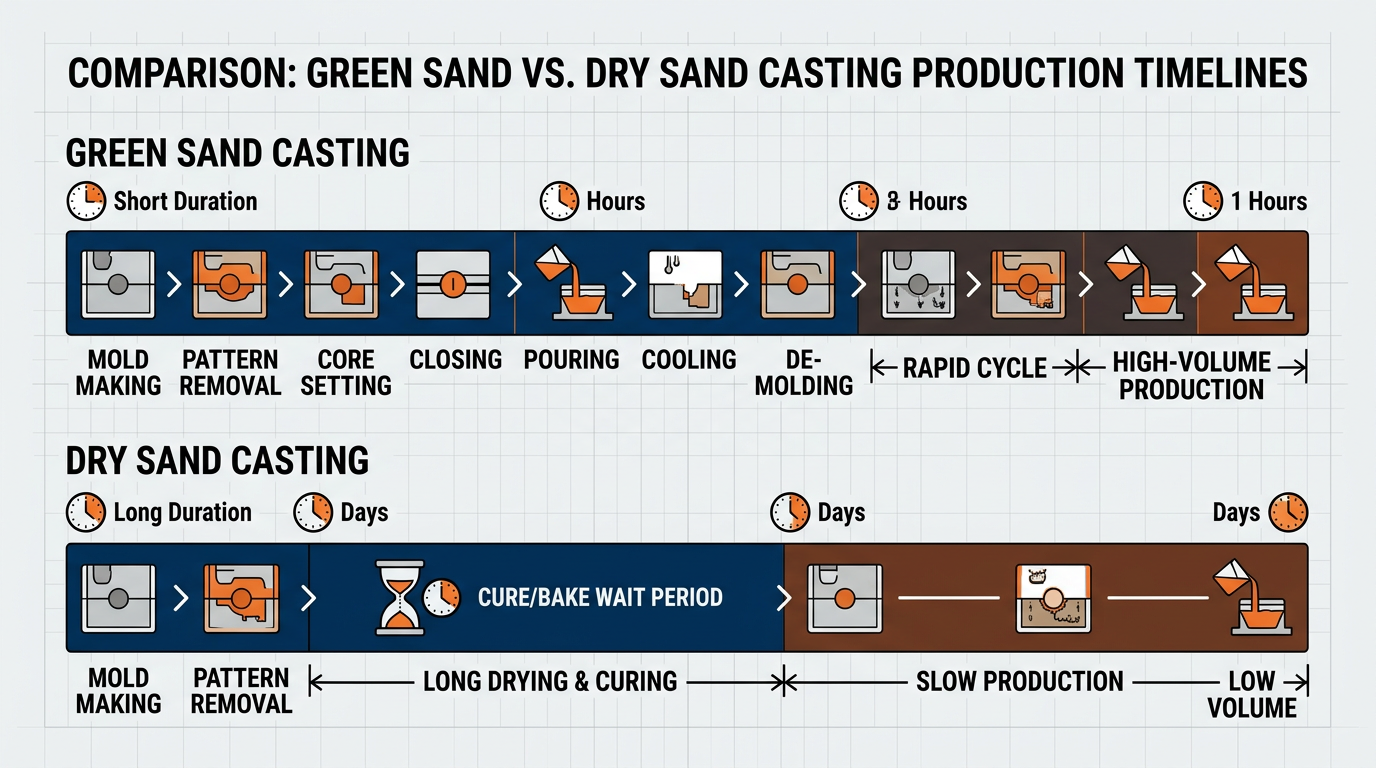
Tooling lifespan is comparable — polyurethane board patterns last about 5,000 units, aluminum tooling handles 50,000 to 100,000 molds in either process. But dry sand’s per-piece cost stays higher because mold production is slower and chemical binders contaminate sand at higher rates than clay, driving up reclamation costs.
I worked on a semi-truck cab mount bracket at Dotson Iron Castings that shows this clearly. The original design was a steel weldment — expensive and dimensionally inconsistent because welding parameters introduced variability. Switching to green sand casting cut the system cost by 10% and actually improved dimensional consistency. The cast version held tighter dimensions than the welded version.
Dry sand’s cost premium buys mold rigidity. If your part does not need that rigidity, you are paying for capability you never use.
When Dry Sand Is Worth the Premium
Dry sand earns its cost in three specific situations.
Moisture-Sensitive Alloys
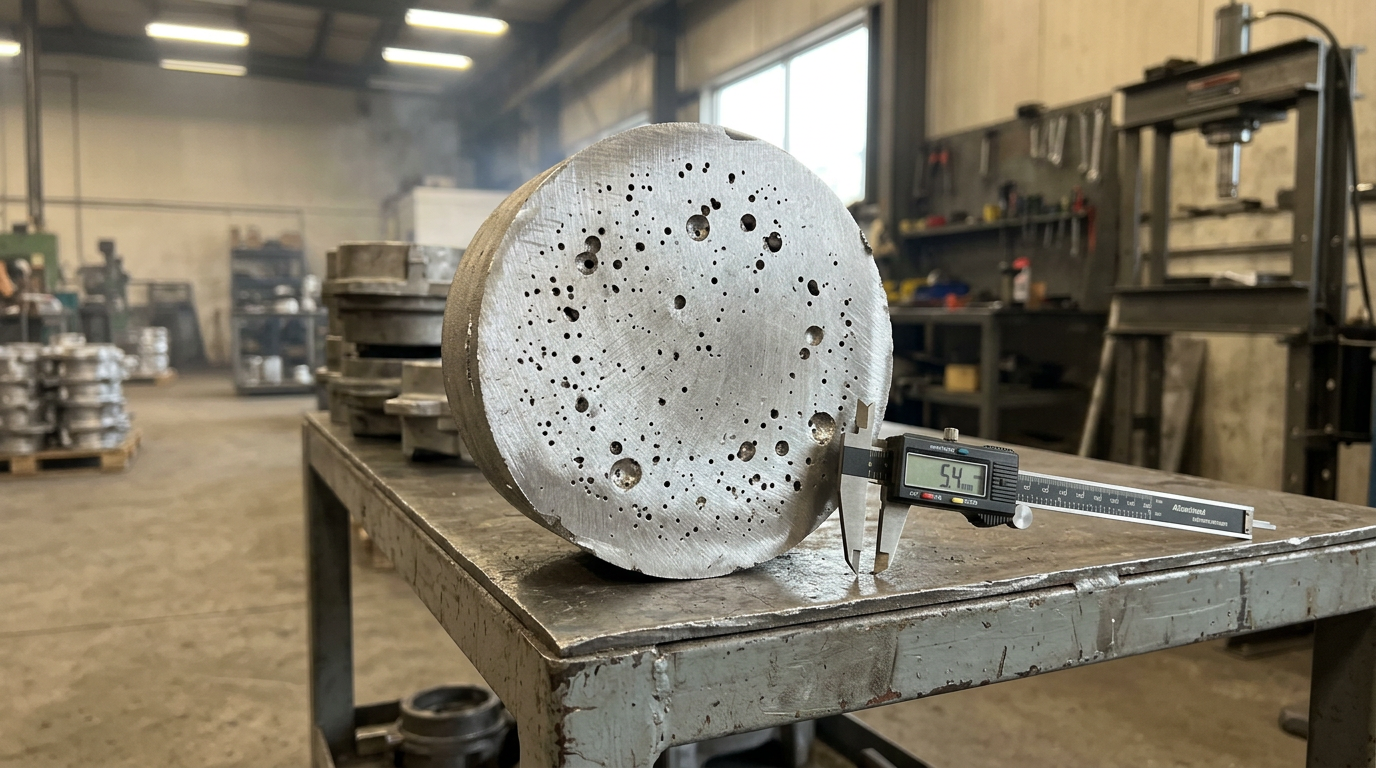
Certain steel grades and magnesium alloys react aggressively with moisture in the mold. Hydrogen pickup from water vapor causes porosity that no amount of process control eliminates in green sand. If your alloy has known moisture sensitivity, dry sand is mandatory.
Complex Core Assemblies
When a casting requires multiple cores with tight positional relationships, core shift becomes the dominant quality risk. Core shift scrap can be significant in high-precision applications regardless of mold type, but dry sand’s rigid mold body provides a more stable reference for core positioning. Large castings with five or more cores and critical internal passages benefit from that stability.
Prototype-to-Production Transition
Before you pour, check whether your project lifecycle calls for both processes. Goldens’ Foundry prototyped cast iron cooker components in no-bake sand for dimensional validation, then transitioned to green sand for production. Prove the design in dry sand at small quantities, then move to green sand when volume justifies it.
Outside these three situations, most parts landing on dry sand lines belong on green sand lines. A housing that needs +/-0.5 mm on bore dimensions, runs in gray iron, and ships 2,000 units per year? Green sand, every time.
A Practical Selection Method
Forget the cost-versus-precision binary. Process selection depends on four factors, and you need to check all four before writing a process specification.
Factor 1: Tolerance class. Identify your tightest as-cast tolerance. If it falls within +/-0.5 mm and the critical dimensions sit in one mold half, green sand handles it. If you need tighter than +/-0.3 mm as-cast with no machining planned, dry sand enters the conversation.
Factor 2: Alloy sensitivity. Check your alloy’s reaction to moisture. Gray iron, ductile iron, and most aluminum alloys pour well in green sand. High-carbon steels and magnesium alloys need evaluation for hydrogen pickup risk.
Factor 3: Geometry complexity. Count your cores and assess their positional tolerances. Single-core or two-core castings with generous print sizes rarely need dry sand rigidity. Five-plus cores with interdependent positional requirements push toward dry sand.
Factor 4: Annual volume. Below 500 pieces per year, dry sand’s slower cycle time matters less. Above 1,000 pieces, green sand’s production rate advantage creates a cost gap that only widens with volume. The 500-to-1,000 crossover zone deserves a total-cost comparison including machining.
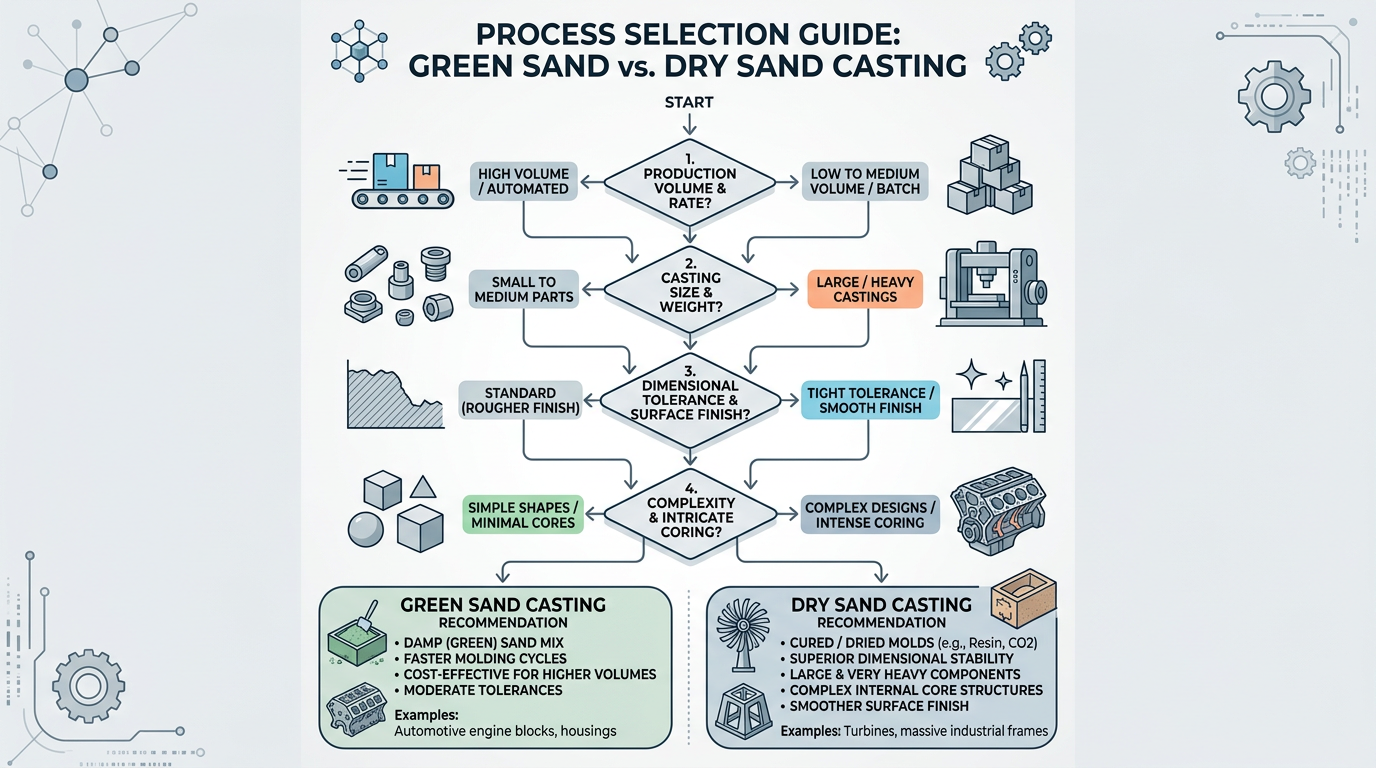
If factors 1 and 2 both point to green sand, factors 3 and 4 are unlikely to override that conclusion. The pattern I see repeatedly is engineers jumping to factor 1 alone, reading a tolerance table, and specifying dry sand without checking whether their alloy even needs it.
Good gating design prevents 70% of casting defects. Quality depends primarily on rigging — pattern quality, gating layout, riser placement — not on whether the mold is wet or dry. I have made over 10,000 patterns across both processes, and the rigging determines the outcome far more than the binder system.
Start With a Test Pour, Not a Process Specification
Pull up the last casting you specified for dry sand. Check the tolerance callouts against achievable green sand numbers — +/-0.5 mm in a single mold half, not the +/-1.0 mm typical values in the reference table. Check whether the critical surfaces get machined anyway. Check the alloy for moisture sensitivity.
If two of those three checks point to green sand, request a trial pour before your next production run. The mold costs half as much, the lead time drops by days, and the dimensional results usually land within your machining envelope. Save dry sand for moisture-sensitive alloys, complex core stacks, and tolerances tighter than green sand can achieve even with good process control.