Most sand molds get used exactly once. The mold is destroyed when you break it apart to pull out the casting — there’s no second pour, no touch-up, no reuse. If you’ve been comparing sand casting to permanent mold processes and wondering about the economics, the answer is simpler than you might expect: the mold is expendable by design, and the pattern is the tool you actually reuse.
The confusion usually comes from mixing up three different things — the mold, the pattern, and the sand. They each have completely different lifespans.
Sand Molds Are Destroyed After One Pour
A sand mold exists for one casting cycle. After the metal solidifies, the mold goes through shakeout — a vibrating table or mechanical process that breaks the sand apart to free the casting inside. The cope and drag (top and bottom halves) are smashed open. The cores collapse. What’s left is loose sand and a raw casting.
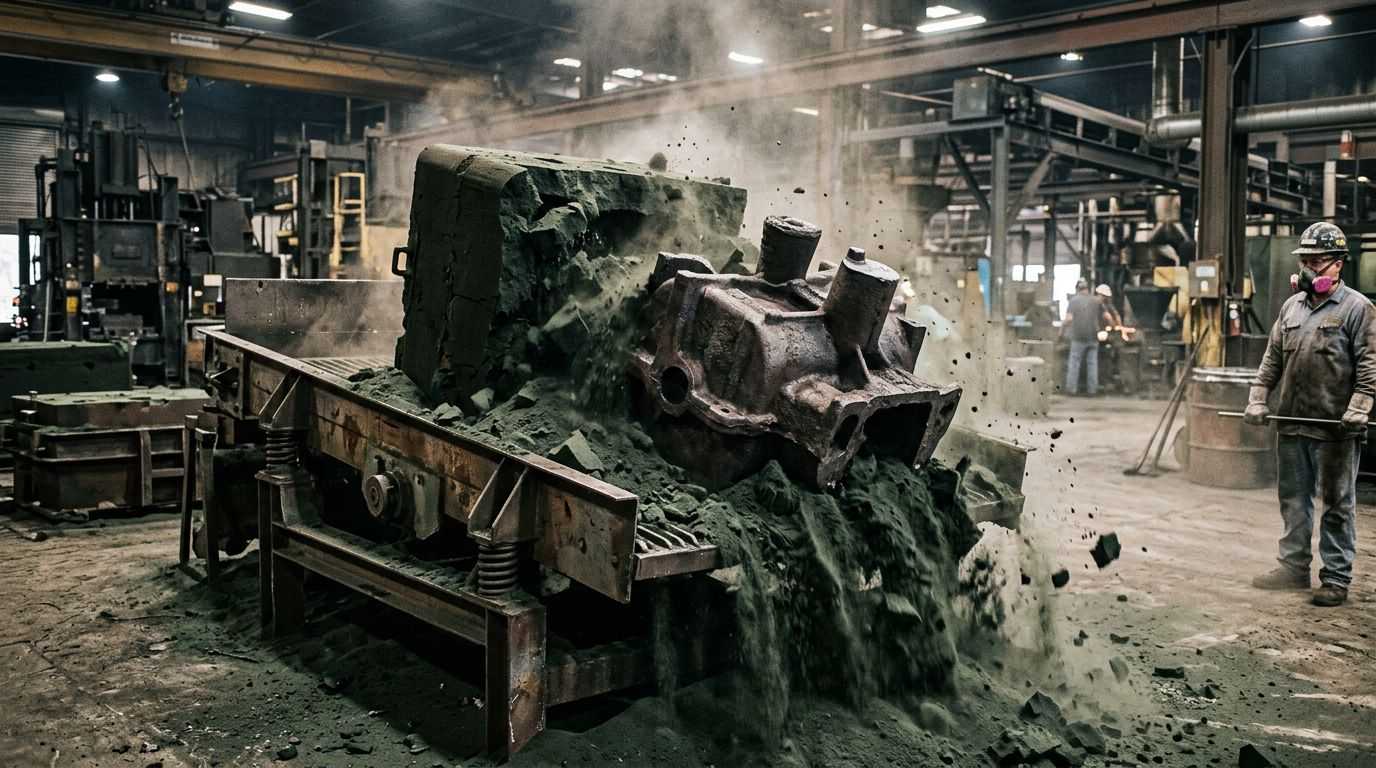
This isn’t a flaw in the process. Sand is packed layer by layer around the pattern, compacted to eliminate air pockets, then the pattern is pulled out to leave a cavity. Once you pour 1,400 C iron into that cavity and it solidifies, the only way to get the casting out is to break the mold apart. You can’t open it like a book and pour again.
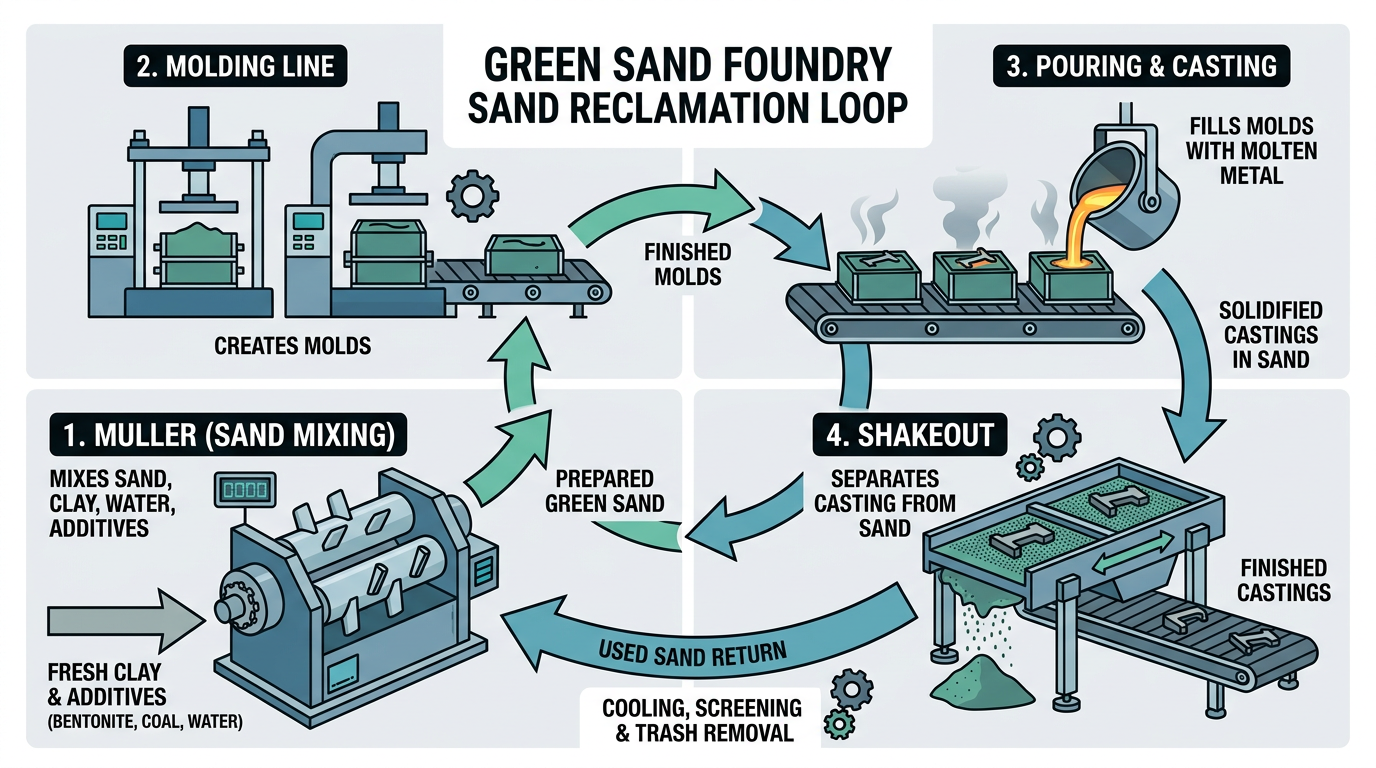
I’ve watched new engineers walk through a shakeout area for the first time and ask why we’re “wasting” all that sand. We’re not — that sand goes straight back to the muller for reconditioning. But the mold shape? Gone the instant we need the casting.
Even hobbyists run into this reality quickly. Sand edges crumble during pattern removal, mold walls crack under metallostatic pressure, and fine features wash out during the pour. A sand mold is holding its shape just long enough to do its job. Asking it to survive a second pour is asking a lot of sand and clay.
The Pattern Is What You Reuse
Here’s what actually gets reused hundreds or thousands of times: the pattern. The pattern is the solid model — wood, aluminum, or urethane — that you press into the sand to create the mold cavity. Pull the pattern out, close the flask, pour metal, break the mold, and then use that same pattern to make the next mold.
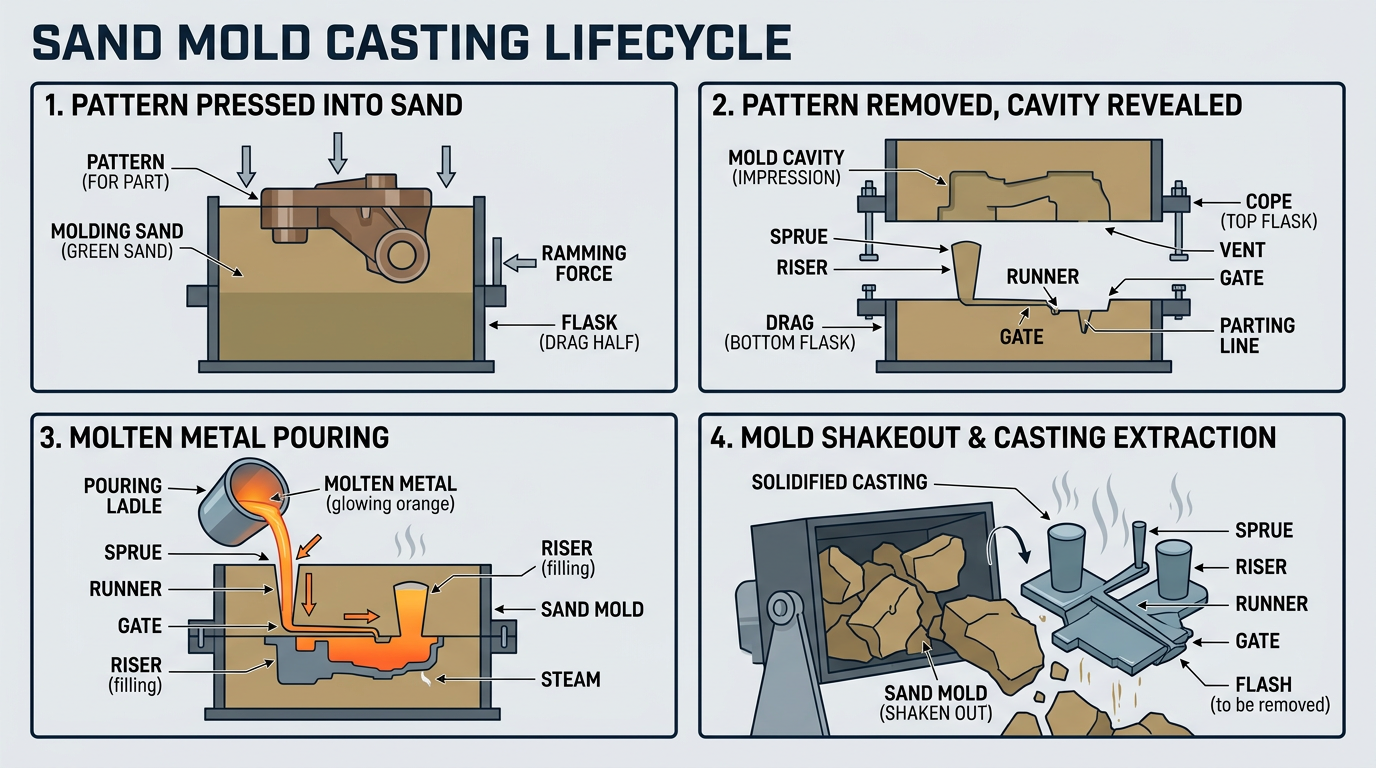
A well-made aluminum pattern can produce 10,000+ molds before it needs refurbishment. Wood patterns wear faster — maybe 500 to 2,000 molds depending on sand type and how carefully your operators handle them. Pattern quality determines casting quality, and it’s the single biggest factor in your per-part consistency over a production run.
Sand casting tooling costs are low compared to die casting or investment casting because the pattern is relatively simple to produce. The mold material — sand — is cheap and recyclable. You’re not machining a steel die that costs $50,000. You’re making a pattern for a fraction of that, and each mold type serves one pour using inexpensive, recoverable material.
Before you pour, check your pattern surfaces for wear marks, especially on edges and around core prints. A worn pattern produces a sloppy mold, and a sloppy mold produces a casting you’ll scrap.
Sand Reclamation Is Not Mold Reuse
The mold is single-use, but the sand is not. After shakeout, the broken mold sand gets screened, cooled, and returned to the system. In a green sand foundry, this happens continuously — the sand loops from muller to molding line to shakeout and back.
U.S. foundries generate six to 10 million tons of spent sand annually, and most of it gets reclaimed internally. The EPA reports approximately 2.6 million tons of spent foundry sand finds beneficial use outside foundries each year — in concrete, road base, and fill applications.
How many cycles can the sand itself handle? Green sand systems reclaim most of their sand continuously, adding small amounts of fresh clay and water each cycle to replace what the heat burns off. Resin-bonded sands have a shorter reclamation window because the thermal processing needed to strip cured resin degrades the grain shape over time.
Sand reclamation makes new molds from old sand. It does not extend the life of any single mold. Every mold is still one-and-done.
The Real Economics
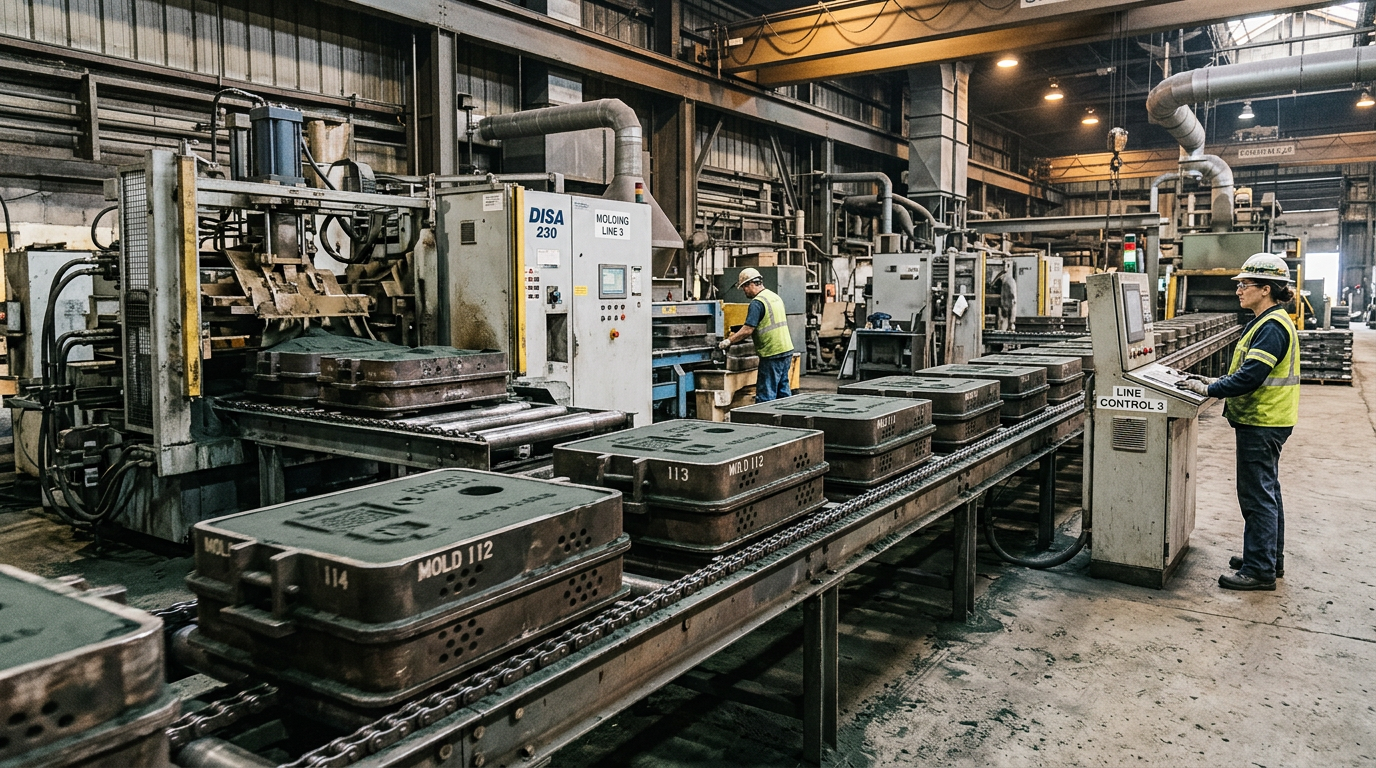
The most common mistake I see in cost comparisons is treating the mold as the investment. It’s not — the pattern is. Sand casting’s cost advantage comes from cheap mold material, fast mold production, and a pattern that lasts thousands of cycles. A green sand line can produce over 300 molds per hour, each one built and destroyed within the same shift. That speed, paired with near-total sand recovery, keeps sand casting competitive for everything from one-off prototypes to runs of 10,000+ parts.
If your volumes justify a mold that actually survives multiple pours, you’re looking at permanent mold casting — a different process entirely, with higher tooling costs and different alloy limitations. For most applications, the disposable sand mold is the more economical choice.