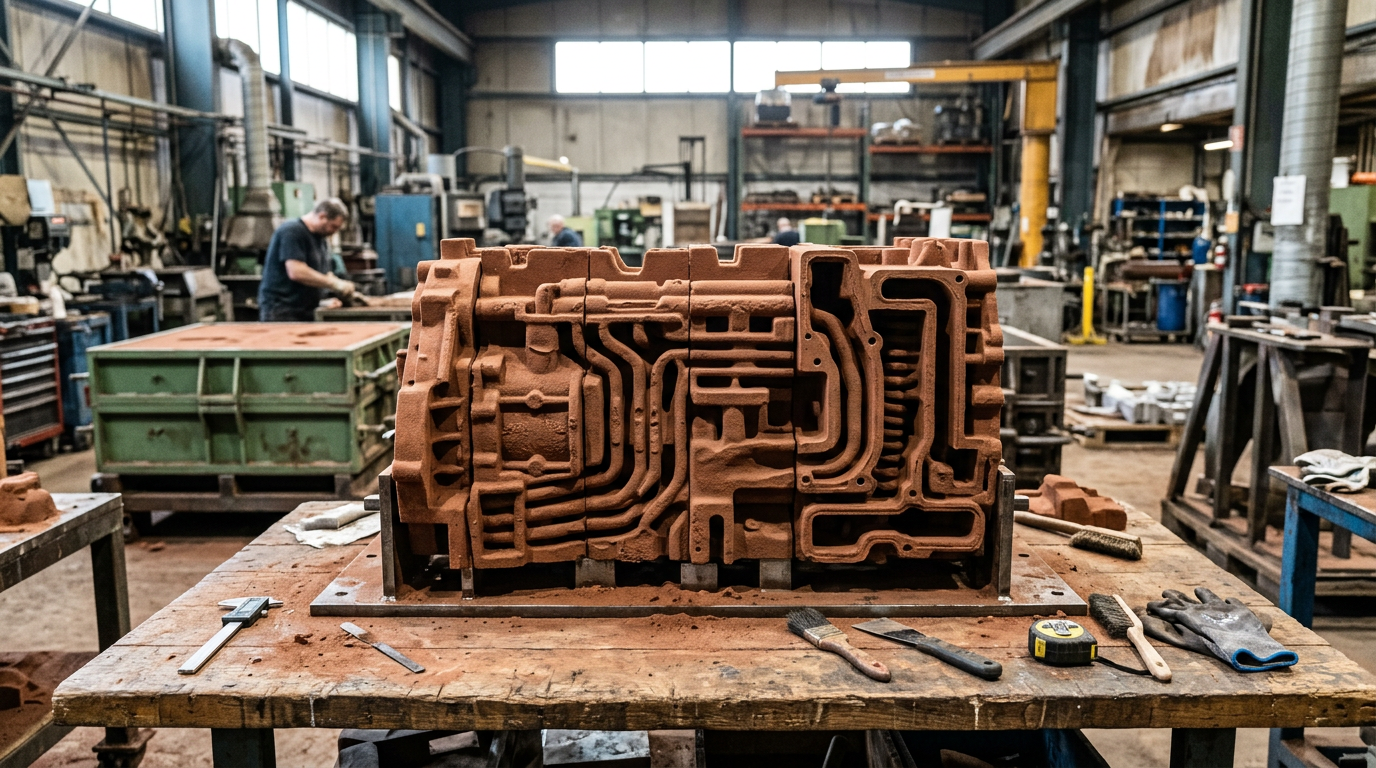
Sand casting is not a permanent mold process. It is an expendable mold process — you break the mold apart to get the casting out, and that mold never gets used again. The pattern (the reusable template that shapes the sand cavity) survives, but the sand mold itself is sacrificed every single cycle.
Casting divides into two branches based on whether the mold survives the pour. Getting this classification right is the first step toward choosing the right process.
Sand Casting Is an Expendable Mold Process
The casting world splits into two categories based on mold reusability. Expendable mold processes destroy the mold during part removal. Permanent mold processes reuse the same die for thousands of cycles.
Sand casting falls squarely on the expendable side. You ram sand around a pattern, remove the pattern, pour molten metal, wait for solidification, then break the sand apart to retrieve the casting. The mold cavity is gone. Here’s what actually happens inside the mold when you shake out the casting: the sand fractures along the metal surface, cores collapse, and the whole structure crumbles into loose sand ready for reclamation.
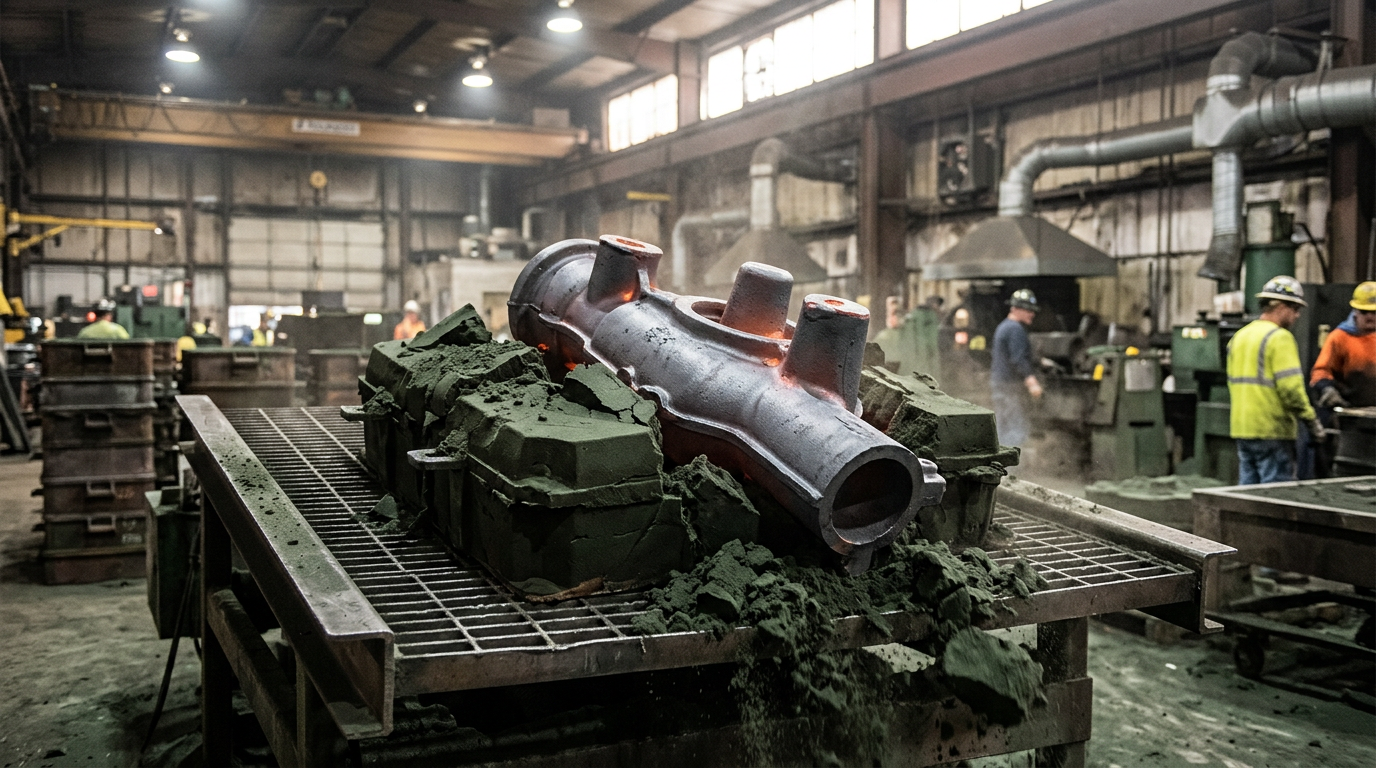
A common point of confusion: the sand itself is recyclable. After shakeout, foundries reclaim most of the sand, recondition it with fresh clay and water, and build new molds. But reclaiming sand material is not the same as reusing the mold. The shaped cavity is destroyed every pour. That destruction is what makes the process expendable.
Other expendable processes work the same way:
- Investment casting burns out a ceramic shell.
- Lost-foam vaporizes a foam pattern.
- Shell molding cracks apart a resin-bonded shell.
In every case, the mold is single-use.
Permanent mold casting is the opposite branch. Metal dies made from steel, iron, or graphite are machined to shape and reused across thousands of pours. Gravity permanent mold, low-pressure permanent mold, and die casting all fall under this category.
Before you pour, check which branch your project belongs in — the process category determines your material options, volume economics, and tooling investment.
How Expendable and Permanent Mold Casting Compare
The practical differences come down to three areas: dimensional precision, production speed, and tooling economics.
Tolerances and Surface Finish
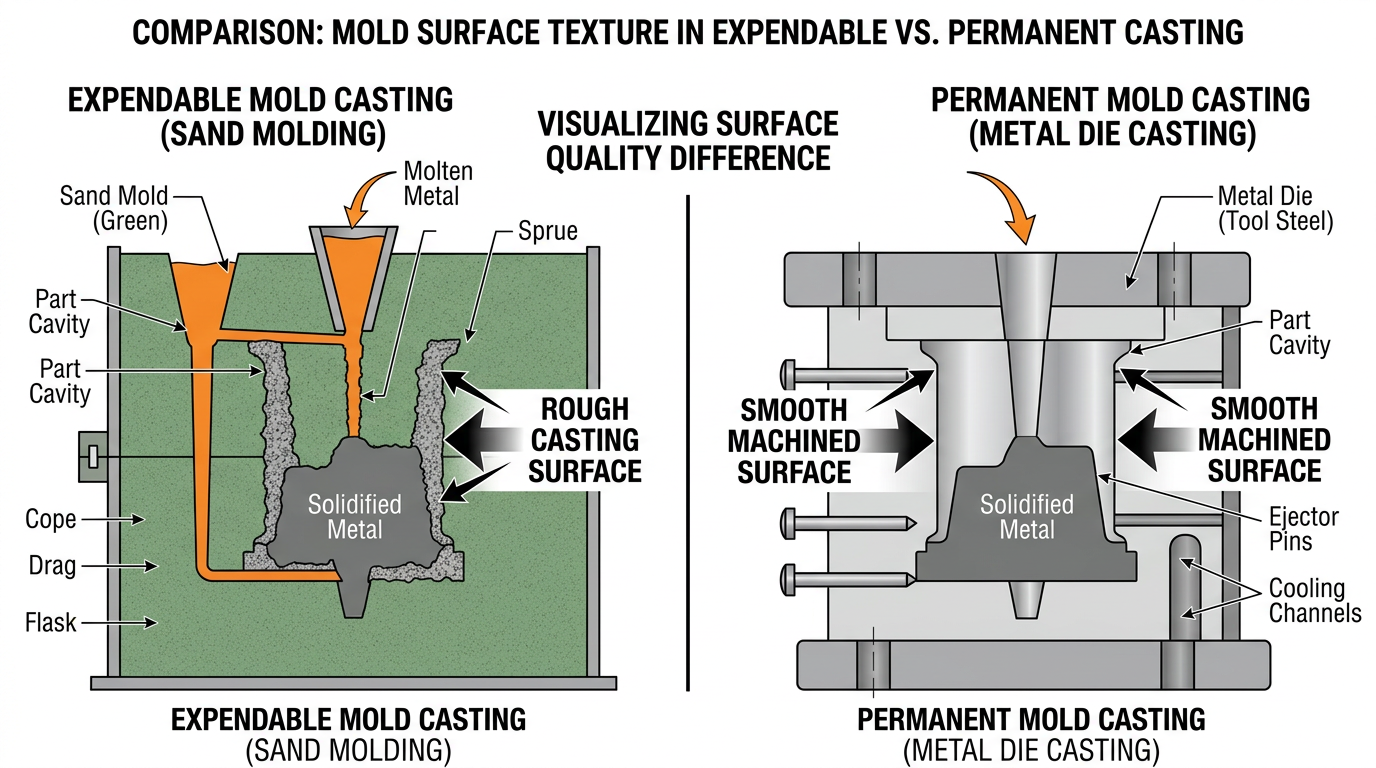
Permanent mold holds tighter tolerances because the metal die maintains its shape precisely across thousands of cycles. Typical permanent mold tolerances run +/- 0.1 to 0.5 mm, with linear tolerance around 0.015 in on the first inch. Sand casting is wider — +/- 0.5 to 3 mm, roughly 0.030 in on the first inch — because sand compacts slightly differently each cycle.
Surface finish follows the same pattern. Permanent mold delivers 125 to 300 microinches as-cast. Sand casting is coarser, because the as-cast surface replicates the grain of the molding sand rather than a machined die face. For most industrial parts, secondary machining brings both to final spec, so the as-cast difference matters mainly for near-net-shape applications.
Cycle Time and Production Volume
Permanent mold cycles in one to five minutes for gravity and low-pressure methods. Sand molds need 30 to 60 minutes per cycle, sometimes longer for heavy sections requiring extended cooling.
That cycle time gap drives volume economics. Sand casting makes sense below roughly 500 pieces per year, where low tooling cost outweighs slower throughput. Permanent mold becomes cost-effective at several thousand pieces per year. Die casting pushes into tens of thousands and beyond.
Tooling Cost
A sand casting pattern — wood or aluminum — costs a fraction of a machined steel permanent mold die. For prototypes, short runs, or large parts, that tooling difference often decides the process before any other factor enters the conversation. Pattern quality still determines casting quality regardless of volume, so cutting corners on pattern work to save money usually backfires in scrap rates.
Why the Comparison Changes for Steel and Iron
The expendable-versus-permanent comparison applies cleanly to aluminum, copper, and zinc — alloys that pour at 1,200 to 1,400 F, temperatures that steel and iron dies handle repeatedly.
For carbon steel, stainless steel, ductile iron, and gray iron, the comparison is largely irrelevant. Steel pours at 2,800 to 2,900 F. At those temperatures, a permanent mold die suffers catastrophic thermal shock and erosion within a handful of pours. The die material cannot survive repeated exposure to the metal being cast.
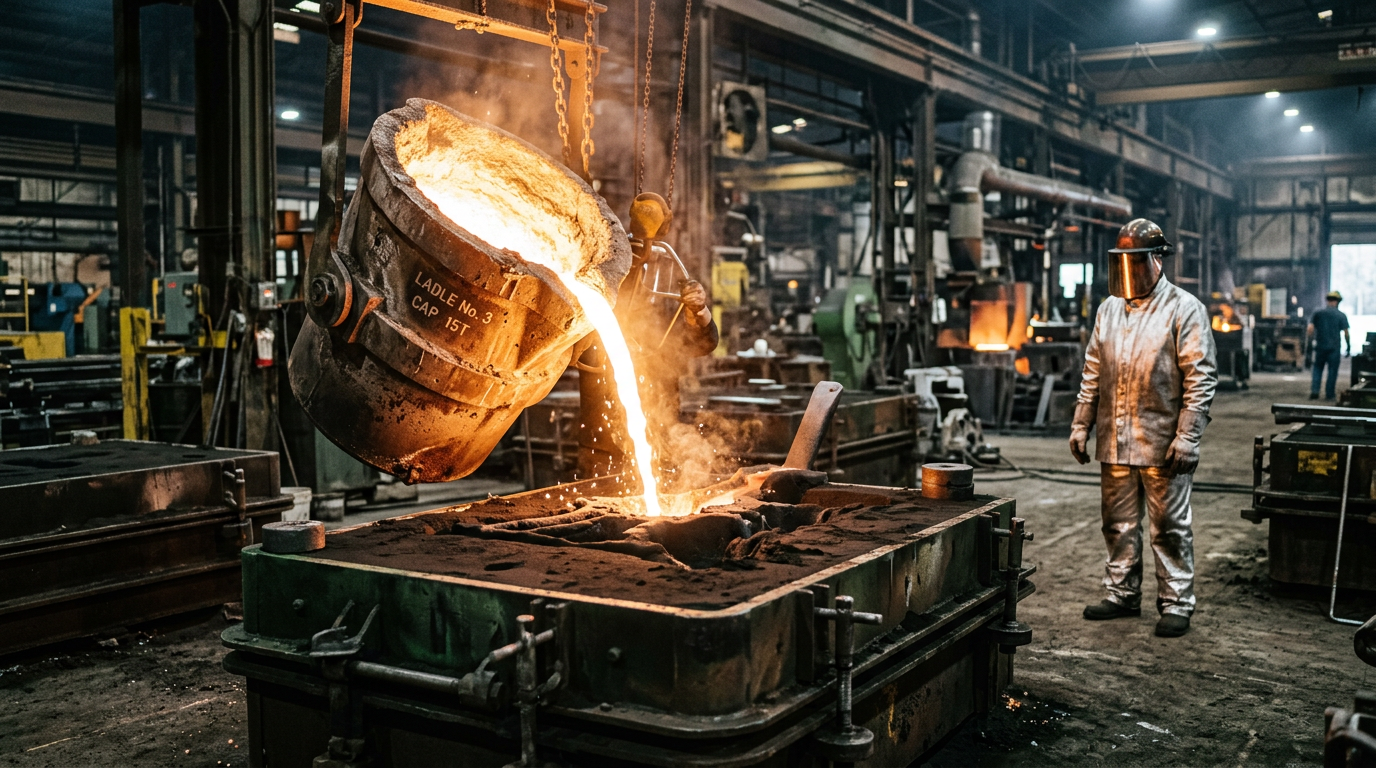
For ferrous metals, sand casting is not the budget option or the low-precision compromise. It is the standard production process — often the only practical casting method for the geometry and volume range most industrial parts require. Investment casting handles some smaller ferrous parts, but for medium and large components, sand casting dominates.
The most common mistake I see in process selection discussions is engineers applying aluminum-based “permanent mold is better” logic to steel and iron projects. If you are casting ferrous alloys, the question is not “sand casting or permanent mold.” The question is which sand casting method — green sand, no-bake, or shell — best fits your tolerances and production volume.
Choosing the Right Process Category
Start with the alloy. If you are casting steel or iron, sand casting is your process — focus on selecting the right sand system and gating design rather than comparing process categories that do not apply.
The volume-driven expendable-versus-permanent trade-off only ever opens up for the low-melting alloys — aluminum, copper, zinc — and it never opens for the steel and iron grades an industrial part is usually specified in.
Geometry matters too. Permanent mold dies struggle with deep internal cavities, severe undercuts, and very large parts. Sand cores handle complex internal passages that would require expensive or impossible die mechanisms. When in doubt, start with alloy and geometry — they narrow your options before cost enters the picture.