
Custom Pump Castings Engineered for Severe Industrial Service
We manufacture custom pump housings, impellers, casings, and heavy-duty sleeves to your exact CAD specifications. Utilizing advanced resin sand casting and in-house 5-axis CNC machining, Kurt Foundry delivers leak-free, high-pressure pump components ready for immediate assembly.
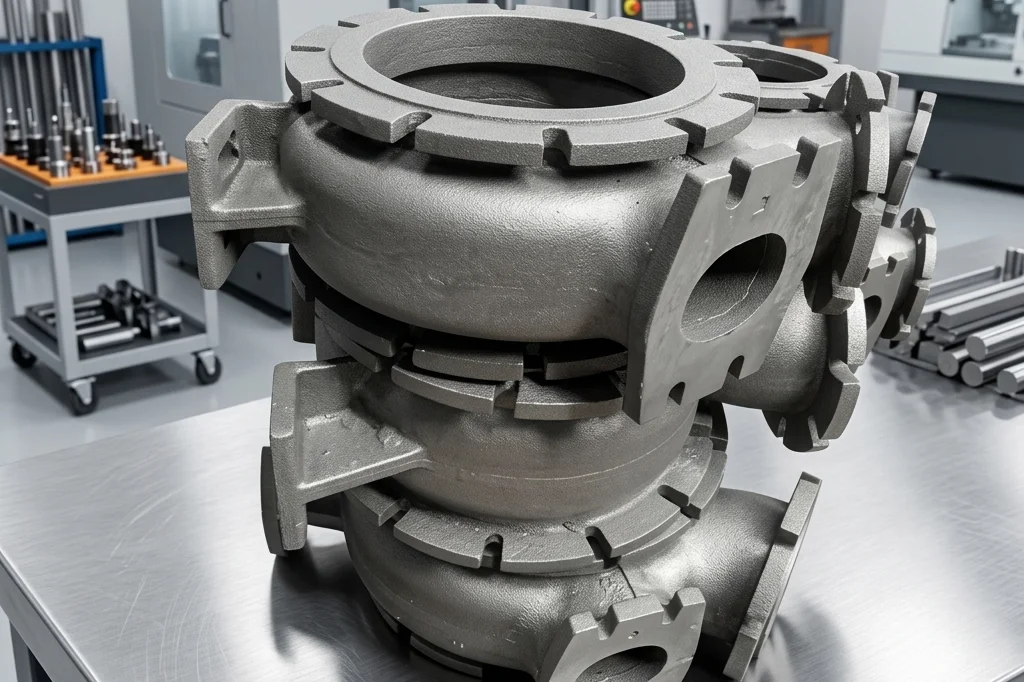
High-Performance Custom Pump Castings
Custom pump castings form the pressure-containing backbone of heavy industrial fluid handling systems. Whether your engineering team designs high-volume water treatment pumps or high-pressure chemical processing units, the structural integrity of the casting dictates the lifespan of the equipment. We pour these critical components to match your exact geometry, ensuring smooth flow passages and absolute structural soundness.
Sourcing heavy pump components often forces procurement managers to choose between high domestic manufacturing costs or unreliable overseas middlemen. Kurt Foundry eliminates that compromise. As a direct-factory manufacturer, our engineering team reviews your specific CAD files for castability and pours the precise alloy grade required for your application. We also perform the final precision machining right on our factory floor.
You receive fully finished, pressure-tested pump castings delivered directly to your North American loading dock. By keeping the entire process under one roof, we maintain strict control over dimensional tolerances and material chemistry. Explore our complete manufacturing capabilities to see how we streamline heavy industrial supply chains.
For application-specific pump castings — such as hydraulic pump housings and bellhousings that adapt electric motors to fluid-power units — we maintain dedicated capability pages with NEMA/SAE flange specifications and concentricity tolerances.
Material Selection for Industrial Pump Castings
See all grey and ductile iron casting options we pour for OEM parts.
Selecting the correct alloy is the most critical decision in pump design. We pour a wide variety of ferrous alloys, tailoring the material chemistry to handle specific fluid mediums, operating pressures, and corrosive environments.
| Standard / Grade | Tensile Strength (MPa) | Yield Strength (MPa) | Elongation (%) | Common Pump Applications |
|---|---|---|---|---|
| ASTM A48 Class 30 (Gray Iron) | ≥ 207 | – | – | Standard water pump casings, agricultural irrigation pumps, low-pressure volutes. |
| ASTM A536 65-45-12 (Ductile Iron) | ≥ 448 | ≥ 310 | ≥ 12 | High-pressure municipal water pumps, heavy-duty industrial slurry pump housings. |
| ASTM A216 WCB (Carbon Steel) | 485 – 655 | ≥ 250 | ≥ 22 | Oil & gas pipeline pumps, high-stress compressor housings, boiler feed pumps. |
| ASTM A351 CF8M (316 Stainless) | ≥ 485 | ≥ 205 | ≥ 30 | Highly corrosive chemical processing pumps, marine saltwater pumps, food-grade impellers. |
| ASTM A743 CA15 (410 Stainless) | ≥ 620 | ≥ 450 | ≥ 18 | High-wear pump impellers, abrasive slurry handling, heavy-duty diffusers. |
Engineering Complex Pump Geometries
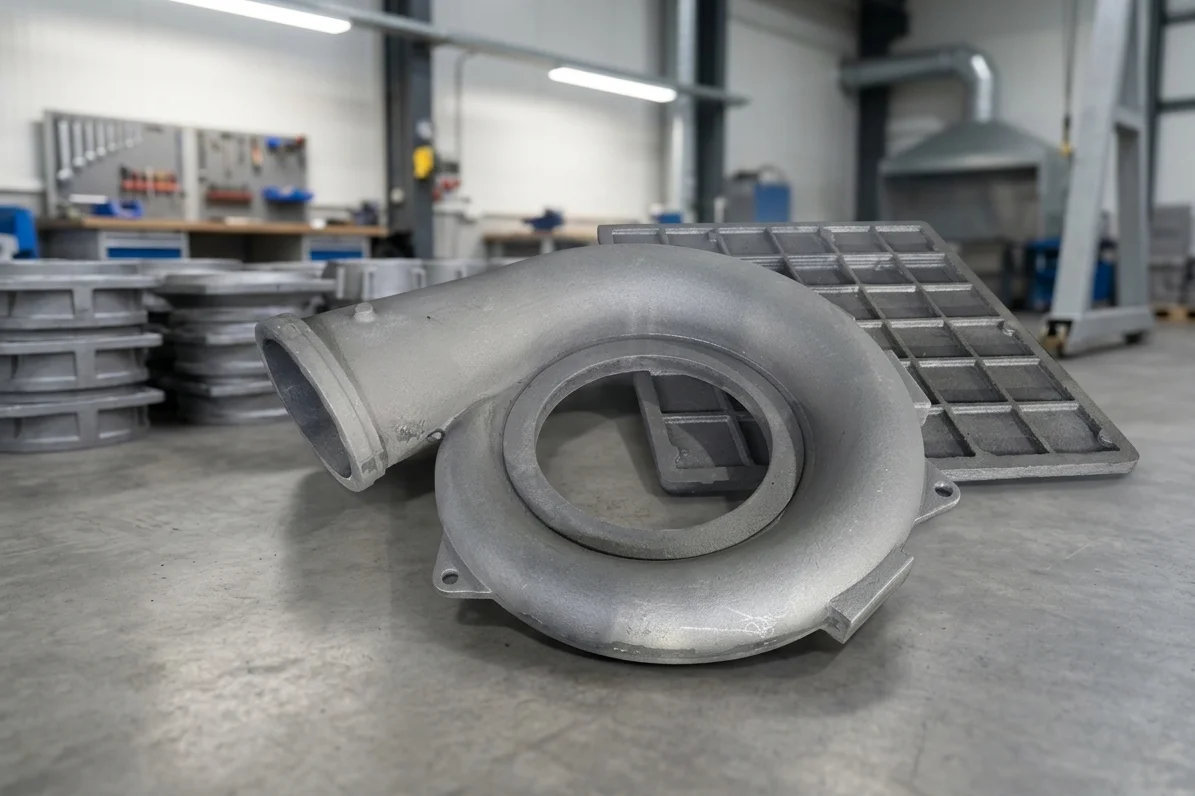
Complex Internal Coring & Smooth Flow Passages
The efficiency of any centrifugal pump relies heavily on the internal surface finish of its volute and impeller. Rough internal surfaces create turbulence, which drastically reduces fluid flow efficiency and accelerates wear. We utilize high-grade furan resin sand to create exceptionally rigid and precise internal cores.
That specialized core-making process allows us to cast highly complex internal geometries with exceptionally smooth flow passages. By minimizing internal friction, our custom castings help maximize the operational lifecycle of your industrial pumps. You can learn more about how we achieve these finishes in our guide on the types of sand used in sand casting.
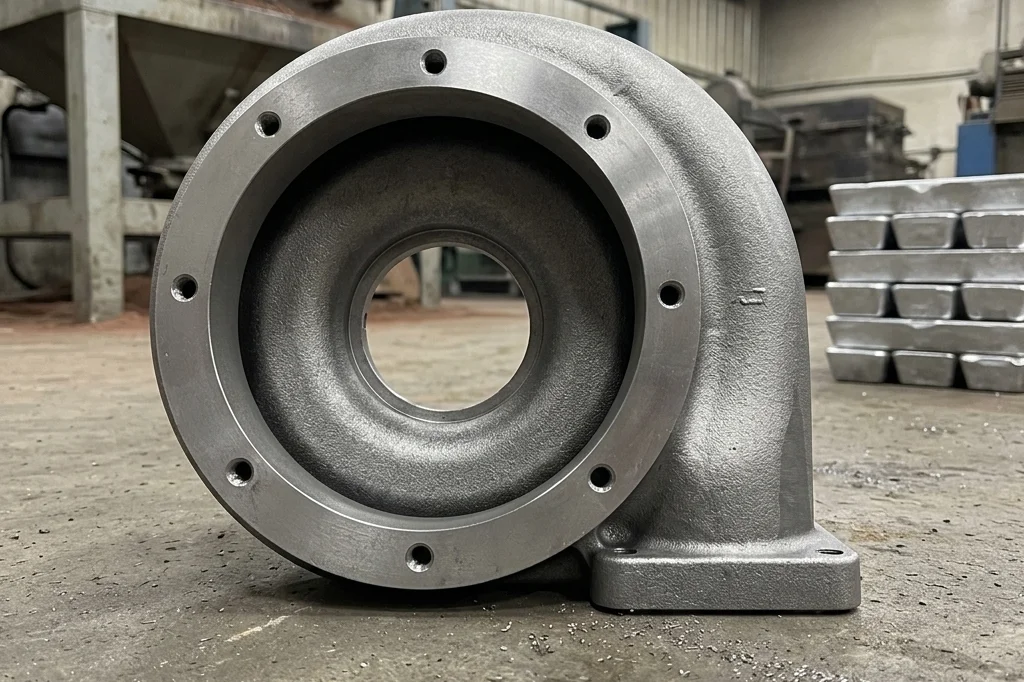
Precision CNC Machining for Sealing Faces
A flawless raw casting is useless if the final machined tolerances fail to hold a gasket. Pump housings require perfectly flat sealing faces and tightly toleranced bearing bores to prevent catastrophic high-pressure leaks. We do not outsource that critical step.
Kurt Foundry operates a dedicated in-house machining workshop equipped with advanced 5-axis CNC centers. We mill the mounting flanges, bore the shaft alignments, and tap the threaded connections to your exact blueprint specifications. That integrated approach guarantees tight dimensional control across every single batch.
The Pump Casting Manufacturing Process
We build quality into the pump casting before the furnace is even fired. Our rigorous process control ensures consistent mechanical properties from the first prototype to full-scale production.
DFM Review & Solidification Simulation
Our foundry metallurgists review your CAD models using advanced Magmasoft 3D simulation. We engineer optimal gating and risering systems to predict and eliminate shrinkage porosity before cutting the physical tooling.
Resin Sand Molding & Core Assembly
We produce the molds and complex internal volute cores using our automated resin sand lines. This molding process provides the extreme rigidity needed to hold tight tolerances during heavy metal pours. Read more about how the sand casting process works.
Spectrometer-Verified Pouring
Chemistry dictates performance. Before pouring the molten metal, we analyze a sample using an optical emission spectrometer. That step guarantees the alloy composition strictly matches your required ASTM standards.
Heat Treatment & Stress Relieving
Pump castings endure immense operational stress. We subject the raw castings to precise quenching, tempering, or normalizing heat treatments. That thermal processing refines the grain structure and relieves internal casting stresses.
5-Axis CNC Machining & Final Inspection
Our machinists transfer the castings to our CNC center for final milling and boring. Afterward, our quality control team performs rigorous dimensional verification using Coordinate Measuring Machines (CMM) and non-destructive testing.
Overcoming Pump Casting Challenges: Quality & Precision
Industrial pumps operate in extreme environments where structural failure is not an option. B2B procurement teams and lead engineers trust Kurt Foundry because we actively engineer solutions to the industry’s most common casting defects.
We specifically target the elimination of internal porosity. High-pressure pump housings will leak if microscopic shrinkage cavities form during the cooling phase. By combining 3D solidification simulation with strategic chill placement in the sand molds, we force directional solidification. That technique ensures dense, completely solid metal walls that easily pass hydrostatic pressure testing.
Furthermore, we verify that internal soundness through comprehensive Non-Destructive Testing (NDT). Depending on your engineering requirements, we perform Ultrasonic Testing (UT) to detect hidden internal flaws and Magnetic Particle Inspection (MPI) to identify surface micro-fractures. Whether you specify custom carbon steel castings for oil pipelines or ductile iron for municipal water, we provide fully traceable Material Test Reports (MTRs) with every shipment.
“We verify internal soundness through comprehensive Non-Destructive Testing (NDT), ensuring dense, completely solid metal walls that easily pass hydrostatic pressure testing.”
FAQs About Custom Pump Castings
We prevent porosity through aggressive front-end engineering. Our team uses Magmasoft 3D simulation to design gating systems that promote directional solidification. We also utilize precision resin sand molds that resist deformation. For critical applications, we verify the internal density using Ultrasonic Testing (UT) before the parts leave our facility.
For severe chemical environments, we highly recommend custom cast 316 Stainless Steel (ASTM A351 CF8M). The addition of molybdenum in the alloy provides exceptional resistance to pitting and crevice corrosion. If you need both corrosion resistance and high wear resistance for abrasive slurries, 410 Stainless Steel (ASTM A743 CA15) is an excellent alternative.
The choice depends entirely on the size of the component. Investment casting is excellent for tiny, intricate parts weighing under 10 lbs. However, for industrial pump housings and large impellers weighing between 1 kg and 1,000 kg (2–2,200 lbs), sand casting is far more cost-effective. You can read a detailed breakdown in our article covering casting sand vs regular sand and related processes.
Yes. Kurt Foundry is a fully integrated manufacturer. We cast the raw pump components and then utilize our in-house 5-axis CNC machining centers to finish all sealing faces, bearing bores, and threaded connections. The castings arrive at your facility completely ready to assemble.
Lead times vary based on the complexity of the pattern tooling and the required production volume. Generally, new tooling and first-article prototypes take 4 to 6 weeks. Once the prototypes are approved, standard production runs typically require 4 to 8 weeks. We provide clear, reliable timelines during the initial quoting phase.
Used In These Industries
See how this product fits into the industries we serve.
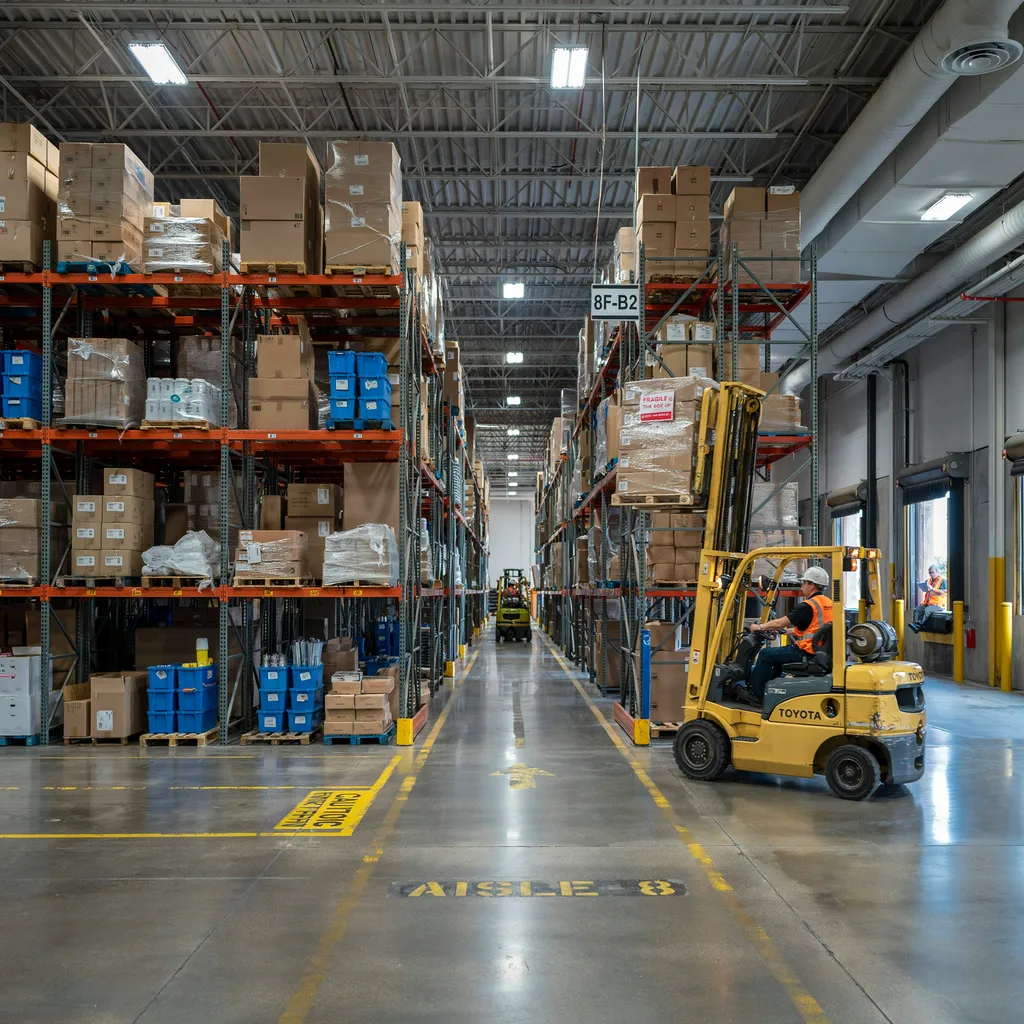
Material Handling & Elevators
Certified-weight castings for elevator and forklift manufacturers requiring precise balance.
View IndustryReady to Optimize Your Pump Supply Chain?
Stop struggling with inconsistent casting quality and unreliable middlemen. Send us your 2D and 3D CAD drawings today. Our senior foundry engineers will review your designs, provide actionable DFM feedback, and deliver a highly competitive direct-factory quote within 48 hours.
Get Your Free Quote Now