Every “top 10 sand casting companies” list I’ve reviewed in the past year was written by a foundry that ranked itself first. That tells you something about the list — and nothing about which supplier actually fits your project. I’ve helped procurement teams shortlist foundries across dozens of industries, and the companies that deliver on time and on spec are never the ones with the best marketing. They’re the ones whose alloy books, capacity ranges, and quality systems match what your project actually needs.
The companies below are selected based on documented capabilities, not self-promotion. No single foundry is “best” — the right one depends on your material, volume, and certification requirements.
What to Evaluate Before Shortlisting
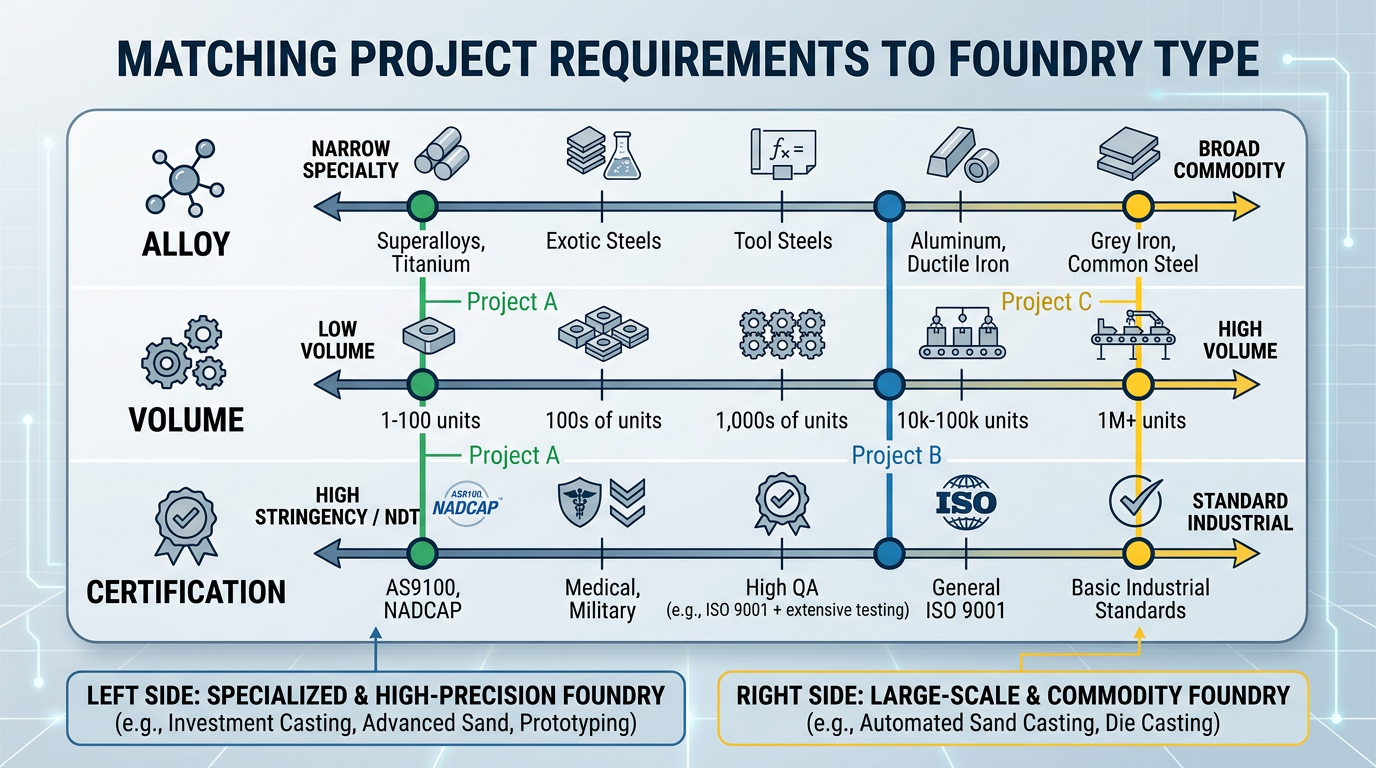
Alloy Range and Specialization
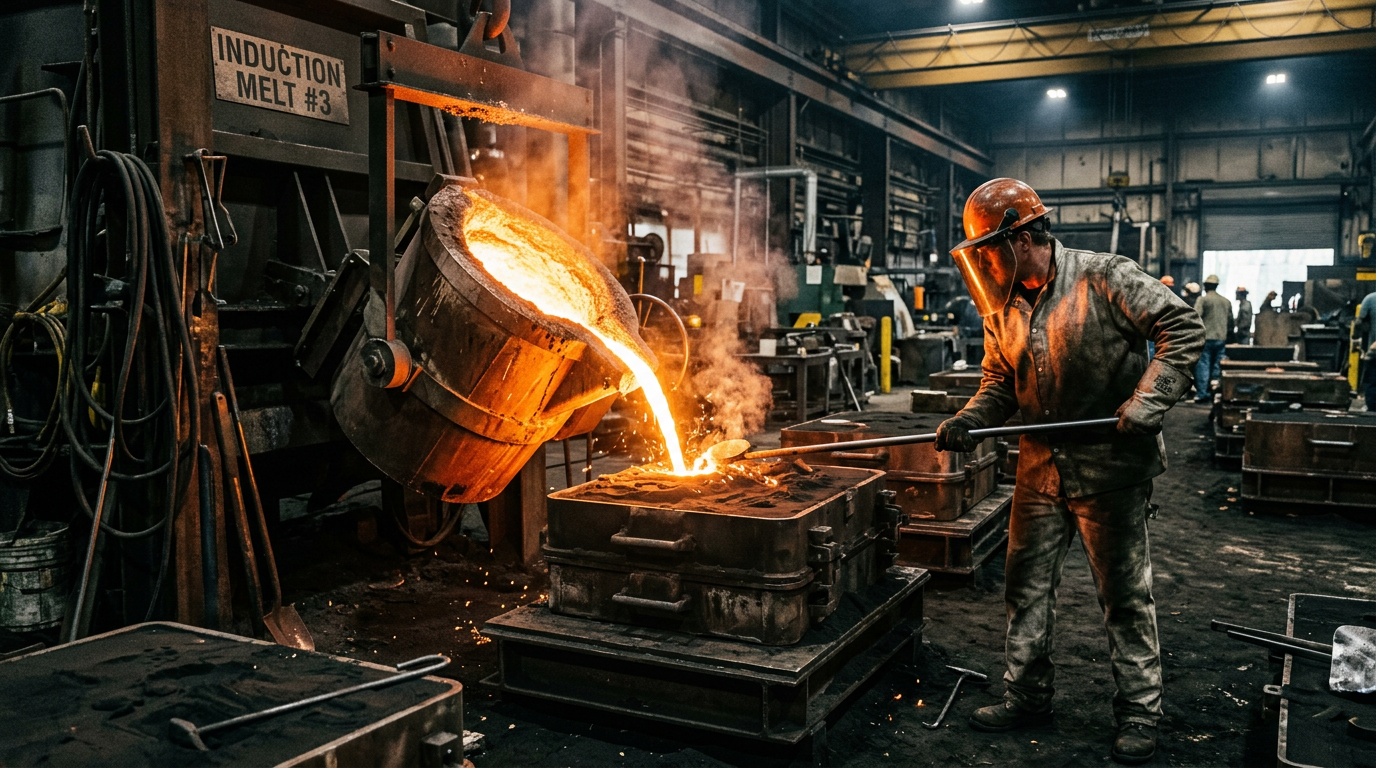
A foundry casting 250+ alloys and a foundry casting five are not interchangeable. Some specialize in high-nickel superalloys for aerospace. Others run gray iron at high volume for automotive. If your project calls for duplex stainless steel or a cobalt-base alloy, half the foundries on any list can’t help you — and most won’t tell you that upfront.
The 32% cost savings I’ve seen from alloy-specialized suppliers didn’t come from price negotiation. They came from a supplier who knew enough about magnesium alloys to recommend a material redesign that cut weight by 25% and eliminated a secondary machining operation. That kind of value only exists at foundries with deep metallurgical bench strength.
Volume Tier Alignment
Oversized vendors deprioritize smaller orders. A foundry running 100,000-unit automotive contracts will not give your 200-piece prototype run the same attention. The reverse is also true — a job shop tooled for short runs can’t scale to 50,000 annual units without quality slipping.
Before you RFQ, define your volume tier: prototype (under 100), low-volume (100-2,000), mid-volume (2,000-20,000), or high-volume (20,000+). Then filter your shortlist accordingly. One-time 100-unit orders and 10,000-unit annual blanket orders receive vastly different quotes and service levels from the same foundry.
Certifications That Matter for Your Industry
ISO 9001 is table stakes — it tells you the foundry has a quality management system, not that they can meet your specific requirements. What matters is whether their certifications align with your industry:
- IATF 16949 for automotive
- AS9100 for aerospace
- FDA compliance for medical devices
- NADCAP for special process accreditation
- Specific ASTM or MIL-SPEC testing capabilities (RT, PT, MT, UT)
I’ve watched a medical OEM achieve 100% first-pass PPAP success by selecting a supplier whose 316L stainless expertise and FDA certification aligned precisely with their enclosure requirements. That’s not luck — that’s matching.
10 Sand Casting Companies Worth Evaluating
Waupaca Foundry
The largest iron foundry in North America. Waupaca runs multiple plants across Wisconsin and is the default supplier for high-volume gray and ductile iron applications in automotive, agriculture, and heavy equipment. If your project needs 50,000+ iron castings per year with tight process control, Waupaca has the throughput. Not the right fit for low-volume or specialty alloys.
Best for: High-volume gray and ductile iron castings.
Stainless Foundry & Engineering
Based in Milwaukee with over 75 years in operation, Stainless Foundry works across more than 250 different alloys — austenitic, ferritic, duplex stainless steels, nickel-base, cobalt-base, copper-base, and specialty grades. Their flask sizes range from 12″ x 18″ to 72″ x 72″, with six induction furnaces capable of approximately 6,000 lbs maximum pour weight. On-site NDT includes RT, PT, MT, VT, and UT.
Best for: Specialty alloy castings requiring extensive NDT and material traceability.
Grede
Grede operates 10 sand casting facilities and produces over 650,000 steering knuckles per year, making them a major player in automotive iron castings. Their scale and process automation suit high-volume ductile iron production with tight dimensional repeatability.
Best for: Automotive-grade ductile iron at high volumes.
MetalTek International
MetalTek offers sand casting alongside investment and centrifugal casting, giving buyers a single supplier for multiple casting methods. This multi-process capability is valuable when your product line includes components better suited to different methods — you qualify one supplier instead of three.
Best for: Multi-method casting programs where sand, investment, and centrifugal parts coexist.
Kurt Foundry
A custom sand casting foundry with in-house CNC machining, Kurt Foundry produces carbon steel, stainless steel, ductile iron, and gray iron castings for North American industries including heavy machinery, oil and gas, mining, and municipal infrastructure. The single-source casting-plus-machining model eliminates coordination between separate foundry and machine shop vendors, which reduces lead time and quality variability on finished components.
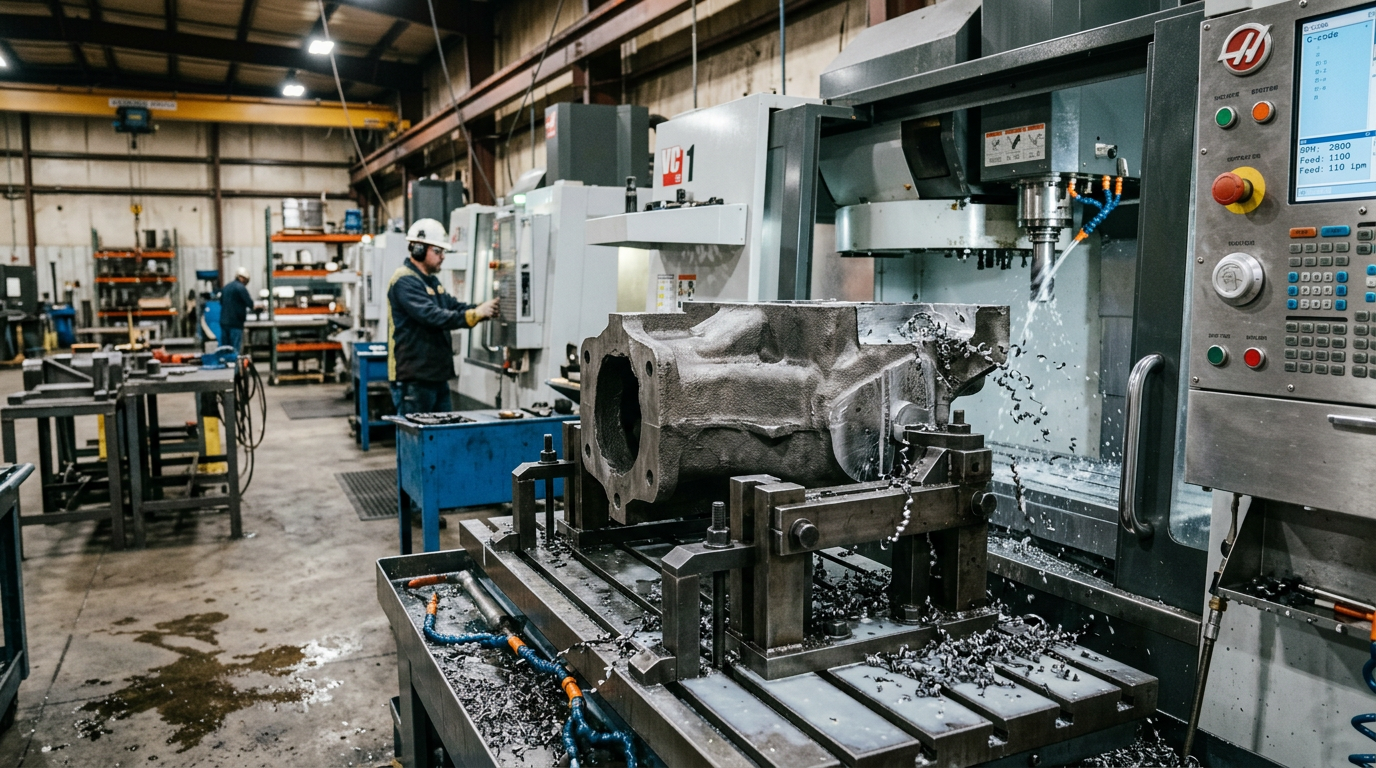
Best for: Custom ferrous castings requiring CNC machining and single-source accountability.
Lincoln Foundry
Based in Erie, PA, Lincoln Foundry positions itself on metallurgical integrity — specifically, controlled charge materials rather than cheap scrap. Their argument is straightforward: budget foundries using inconsistent scrap create off-spec castings that waste machining time at the most expensive stage of production. For buyers where total cost matters more than piece price, that philosophy is worth investigating.
Best for: Quality-critical castings where material traceability justifies a domestic price premium.
Erie Bronze & Aluminum
A non-ferrous specialist handling bronze, aluminum, and copper-base alloys. If your application calls for corrosion-resistant bronze castings for marine or pump applications, Erie Bronze serves a niche that most iron-focused foundries cannot touch.
Best for: Non-ferrous castings in bronze, aluminum, and copper alloys.
Le Claire Manufacturing
A smaller specialty foundry that ranks #1 in click-share data on industrial supplier directories. Le Claire serves the agricultural and industrial equipment markets with custom iron and steel castings. Their smaller scale may be an advantage for buyers seeking responsive service on low-to-mid volume projects where larger foundries might deprioritize the order.
Best for: Low-to-mid volume custom castings where supplier responsiveness matters.
Dawang Metals
A China-based foundry with approximately 500 employees and high-volume production capability. Dawang is the offshore option for buyers seeking cost-competitive castings on large annual contracts. The caveat: offshore sourcing adds shipping lead time, tariff exposure, and communication overhead that must be factored into total landed cost.
Best for: High-volume commodity castings where piece price is the primary driver.
Hitachi Metals (Moka Works)
Hitachi brings Japanese manufacturing discipline to sand casting, with waste sand recycling systems and process control standards that reflect their automotive-grade quality culture. For buyers who need castings meeting Japanese OEM quality expectations, Hitachi Metals is a known quantity.
Best for: Precision iron castings meeting Japanese OEM quality standards.
Domestic vs Offshore Sourcing
The piece-price gap between domestic and offshore foundries runs 20-40% on commodity iron castings. That number looks compelling on a spreadsheet — and it’s where most procurement teams stop analyzing.
When you factor in the total landed cost, the picture changes. Overseas orders take weeks by container, carry unpredictable tariff costs, and quality issues mean you may need to scrap a significant portion of incoming parts. I’ve seen procurement teams save 20% on piece price and lose 40% on rework, air freight for replacements, and production line downtime waiting for usable parts.
Budget foundries — domestic or offshore — that cut costs by using cheap scrap metal create inconsistent alloy composition. Those defective castings pass visual inspection, reach your CNC machines, and waste machining time at the most expensive stage of your production process. The piece-price savings evaporate.
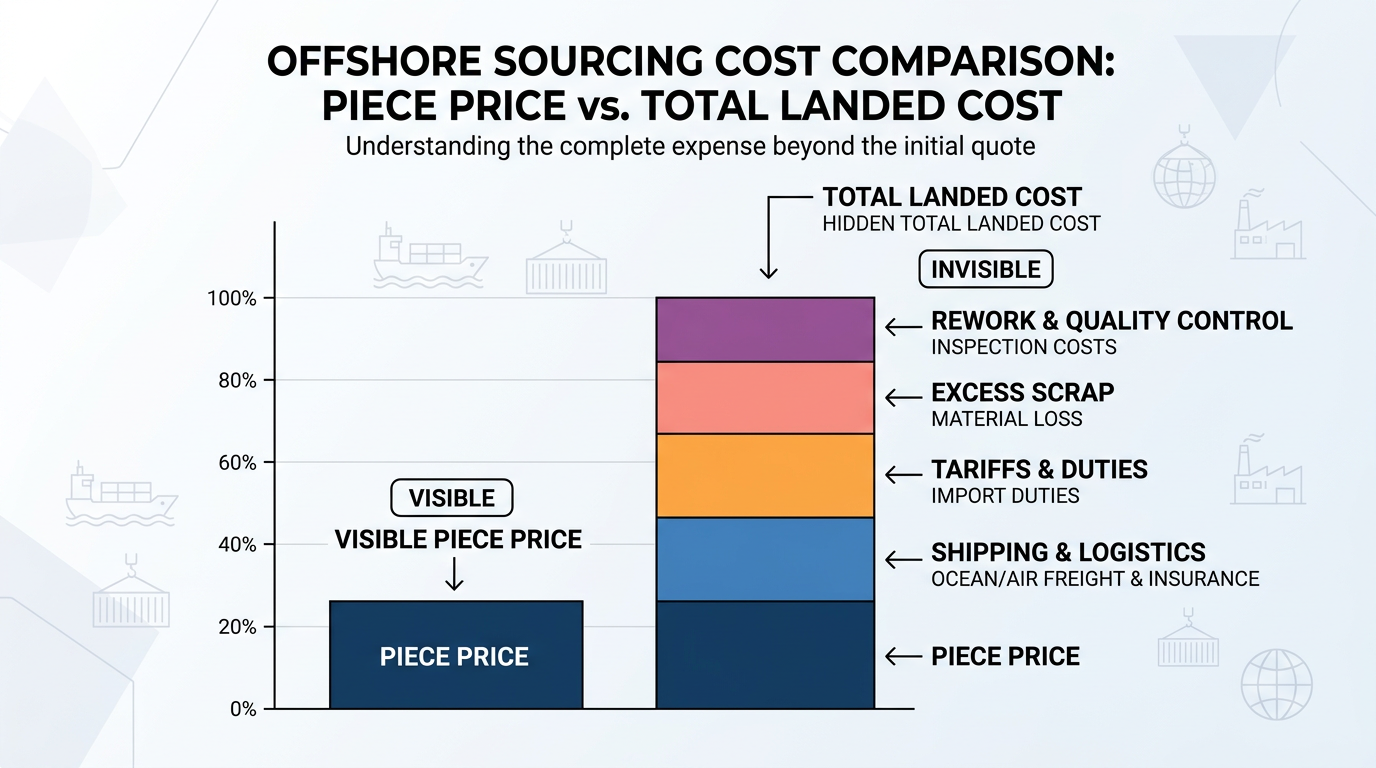
Offshore makes sense for high-volume commodity parts with loose tolerances and established supplier relationships. Domestic makes sense for quality-critical components, tight tolerances, low-to-mid volumes, and applications where supply chain disruption carries real production risk. Neither is universally better. The question is which risk profile your project can absorb.
How to Match a Foundry to Your Project
Before sending a single RFQ, answer three questions:
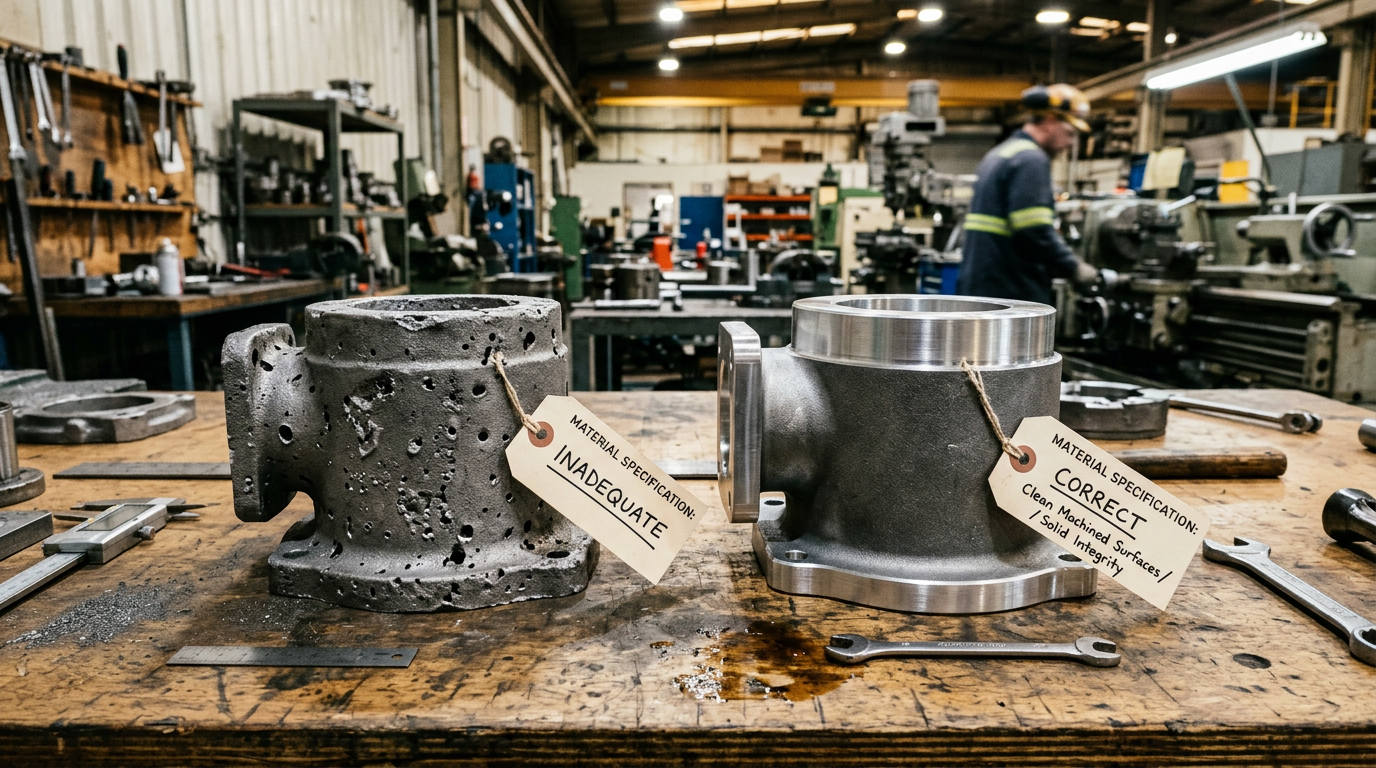
1. What alloy does your application require? If you don’t specify, the supplier will choose the cheapest option that technically qualifies — and you’ll discover the gap between “meets spec” and “meets your actual service conditions” after parts are installed. Define the alloy grade, not just the material family.
2. What is your annual volume? A 200-piece order and a 20,000-piece blanket order need different foundries. Sending your low-volume prototype RFQ to a high-volume automotive foundry wastes both your time and theirs. Match your volume tier to a foundry that treats that volume as core business.
3. What certifications and testing does your industry require? If you need IATF 16949 for automotive, AS9100 for aerospace, or FDA compliance for medical, verify before quoting — not after. Adding certification requirements mid-project doubles lead time and often kills the supplier relationship.
Run every candidate on your shortlist through these three filters. A foundry that matches on all three is worth a site visit. A foundry that misses on even one will cost you time, money, or both — regardless of where they rank on anyone’s top 10 list.
The Bottom Line
No top 10 list can tell you which foundry is right for your project. What it can do is give you a starting point. The 10 companies above span a cross-section of the sand casting market — from specialty alloy houses to high-volume iron foundries, domestic single-source shops to offshore production facilities.
Your next step is filtering, not browsing. Define your alloy, your volume, and your certification requirements on paper before you contact anyone. The foundries that match those three factors are your real shortlist — and it will be three or four names, not ten. When you factor in the total landed cost of working with a mismatched supplier, getting the shortlist right is the highest-ROI step in your entire procurement process.