
Every chill and every chaplet I place in a mold solves one of two problems: heat or position. A chill extracts heat to control how metal solidifies. A chaplet holds a core in place so it doesn’t move during the pour. That thermal-versus-mechanical distinction is the fastest way to understand when you need each one — and when you need both.
What Chills Do Inside a Casting Mold
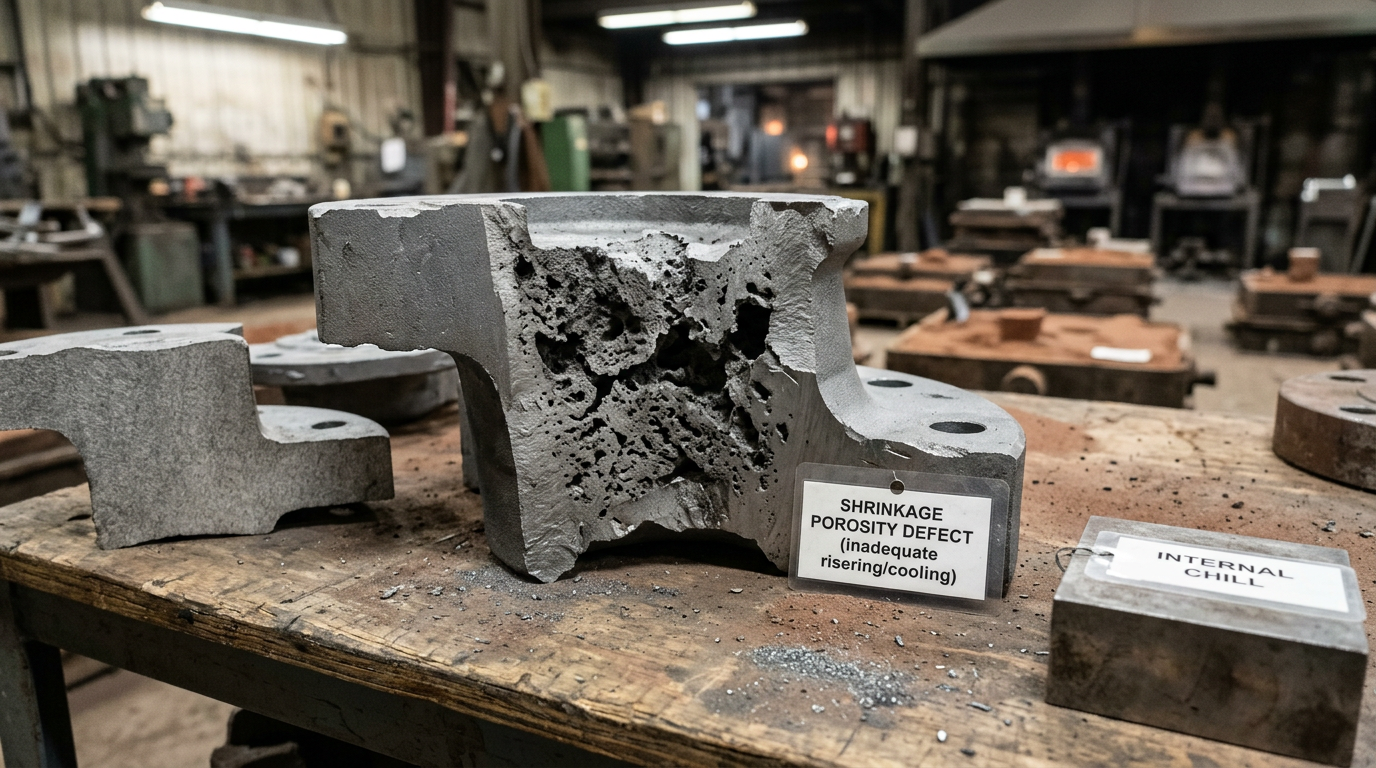
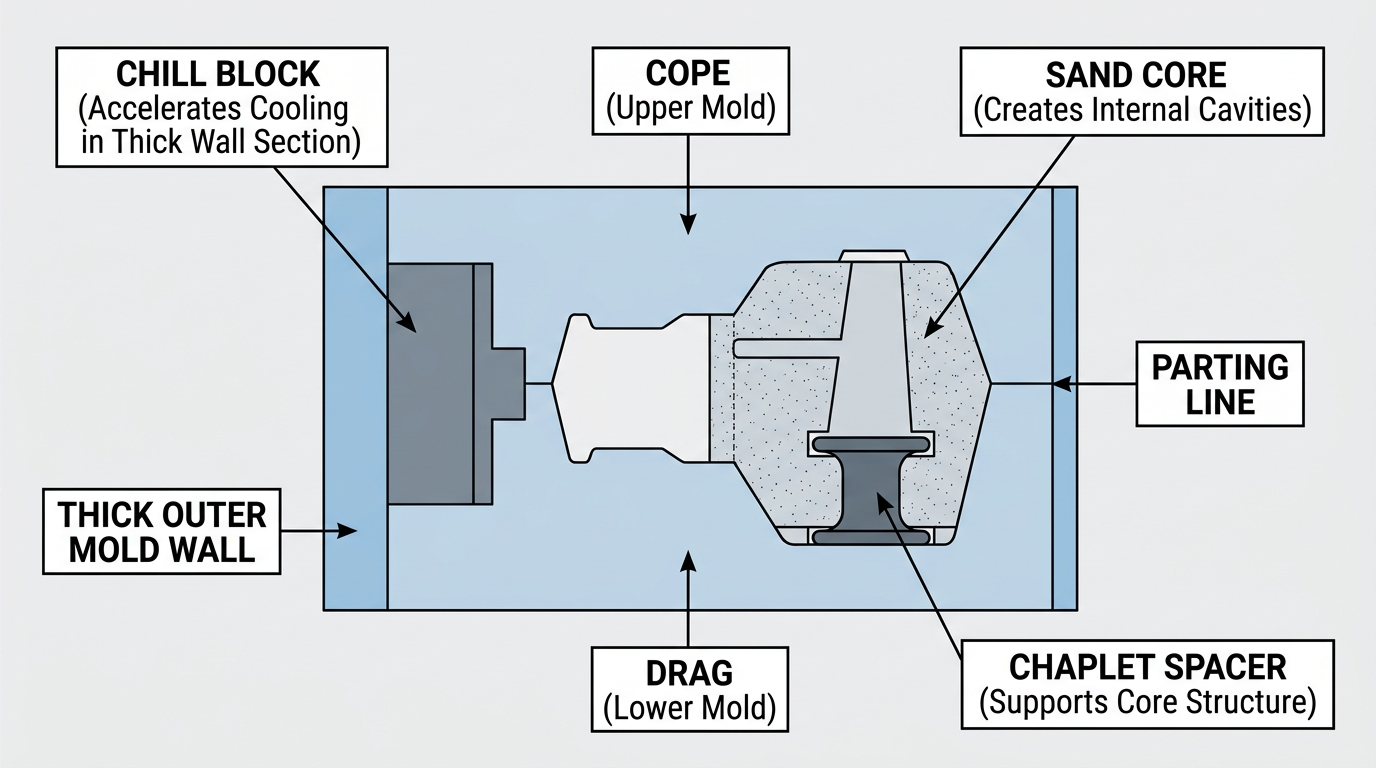
A chill is a metal block that pulls heat out of the molten casting faster than the sand around it. Place one against a thick section, and that section cools at roughly the same rate as the thinner walls nearby. Without it, the thick section solidifies last, shrinks inward, and leaves you with porosity right where you need the most strength.
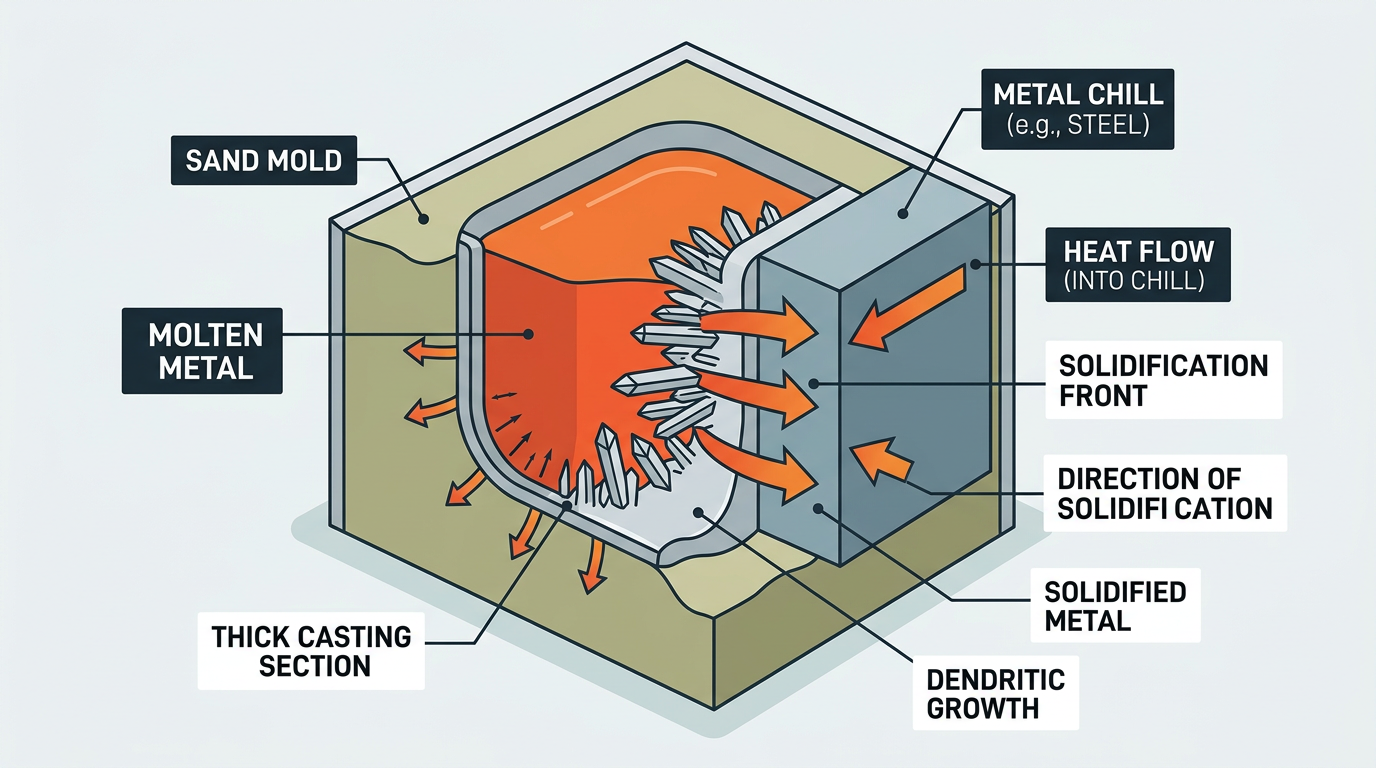
External vs Internal Chills
External chills sit in the mold wall, touching the casting surface from outside. They’re usually copper, aluminum, or cast iron — metals chosen for high thermal conductivity. They are coated with tin or a refractory wash specifically to prevent them from fusing to the casting. You want the heat transfer, not a permanent bond.
Internal chills go inside the mold cavity. They become part of the finished casting, so they must be the same alloy as the pour. Think of them as pre-placed metal that absorbs heat from the surrounding liquid and promotes solidification from the inside out.
The defect a chill prevents is shrinkage porosity. If you’re seeing voids, spongy sections, or sink marks on heavy flanges, work backwards from the riser — and check whether a chill should be directing solidification toward it. Carbon steel castings are especially prone to this because steel shrinks more than iron during solidification.
What Chaplets Do Inside a Casting Mold
A chaplet is a metal spacer that holds a core in position while molten metal fills the mold. Cores create internal cavities, but they’re surrounded by liquid metal during the pour. Without mechanical support, they move.
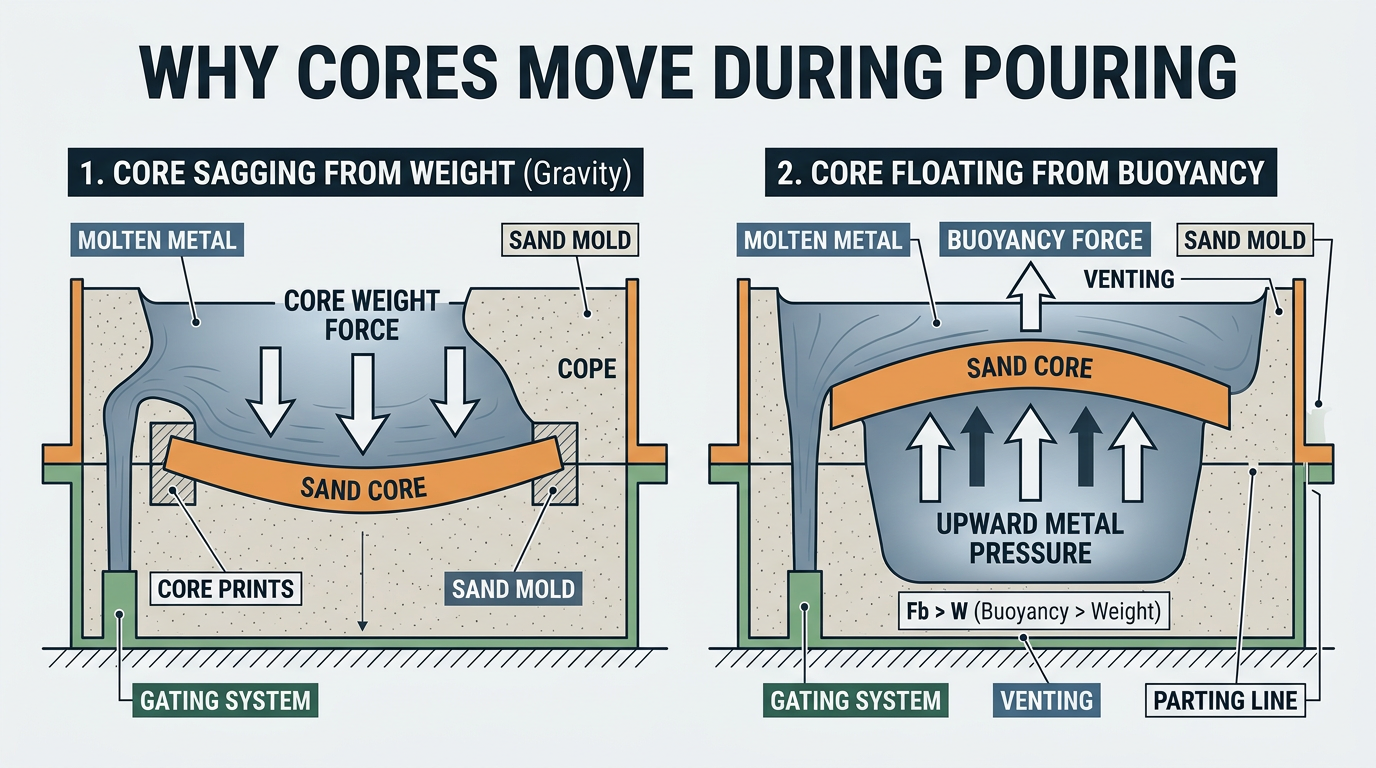
Why Cores Move During Pouring
The most common problem is sagging. A long core supported only at its ends will deflect under its own weight once hot metal surrounds it, shifting the internal geometry of your casting.
The less obvious problem is floating. Thin, lightweight cores experience buoyancy from the molten metal pushing upward. The upward thrust lifts the core out of position — a failure mode I’ve seen catch even experienced molders off guard the first time it happens in a new pattern.
Material Matching and Witness Marks
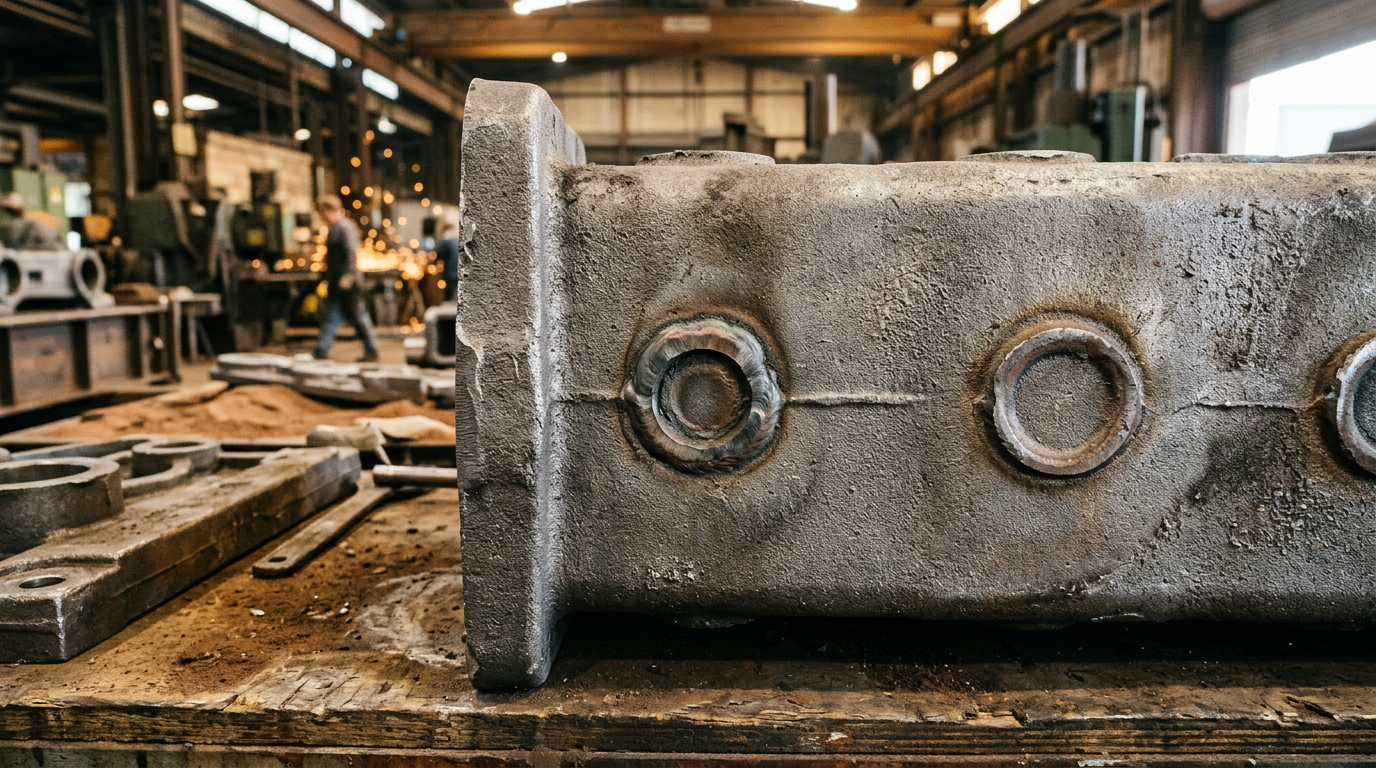
Chaplets are made from the same alloy as the casting. When molten metal contacts the chaplet, the surface partially melts and fuses into the pour. This fusion bonding is by design — the chaplet becomes part of the finished casting.
That fusion creates a visible witness mark on the casting surface. On non-critical surfaces, a small witness mark is cosmetic. On pressure-containing or machined surfaces, grinding off chaplet marks and weld-repairing the area is possible, but the metallurgy at the fusion zone is always suspect — especially in cast iron, where the repair weld can crack.
Before you pour a trial run on a new pattern, check your chaplet locations against the customer’s critical surface callouts. A chaplet witness mark on a sealing face creates a reject.
Chills vs Chaplets Side by Side
Here’s what actually happens inside the mold when you compare the two directly:
| Chill | Chaplet | |
|---|---|---|
| Problem solved | Uneven solidification (thermal) | Core movement (mechanical) |
| What it does | Extracts heat to speed local cooling | Holds core in position during pour |
| Location | Against thick sections or hot spots | Between core and mold wall |
| Material | High-conductivity metal (copper, aluminum, iron) | Same alloy as the casting |
| After pour | External: removed. Internal: stays in casting | Fuses into the casting permanently |
| Surface evidence | None (external) or invisible (internal, same alloy) | Visible witness mark at fusion zone |
| Defect prevented | Shrinkage porosity | Core shift, core float |
Can a Chaplet Work as a Chill?
In theory, a chaplet sitting in a hot spot could absorb some heat. In practice, it almost never works that way. Chaplet placement is driven by where the core needs support. Chill placement is driven by where solidification needs to speed up. Those two locations rarely overlap, and when they do, it’s coincidental — not something you should design around.
If you need both thermal control and core support in the same casting, use both tools. Place chills based on solidification needs and chaplets based on core geometry. I’ve worked on castings with six chills and four chaplets in the same mold — each one solving its own problem.
The Two-Problem Mental Model
When you see chills and chaplets on a casting drawing, ask one question: is the problem thermal or mechanical? If metal is solidifying unevenly and you’re risking shrinkage, you need a chill. If a core is unsupported and could shift or float, you need a chaplet. Get that distinction right, and the material choices, placement logic, and quality implications all follow from it. Specify chaplet locations with an eye on the surface finish drawing — witness marks in the wrong place create more rework than the core shift they prevented.