
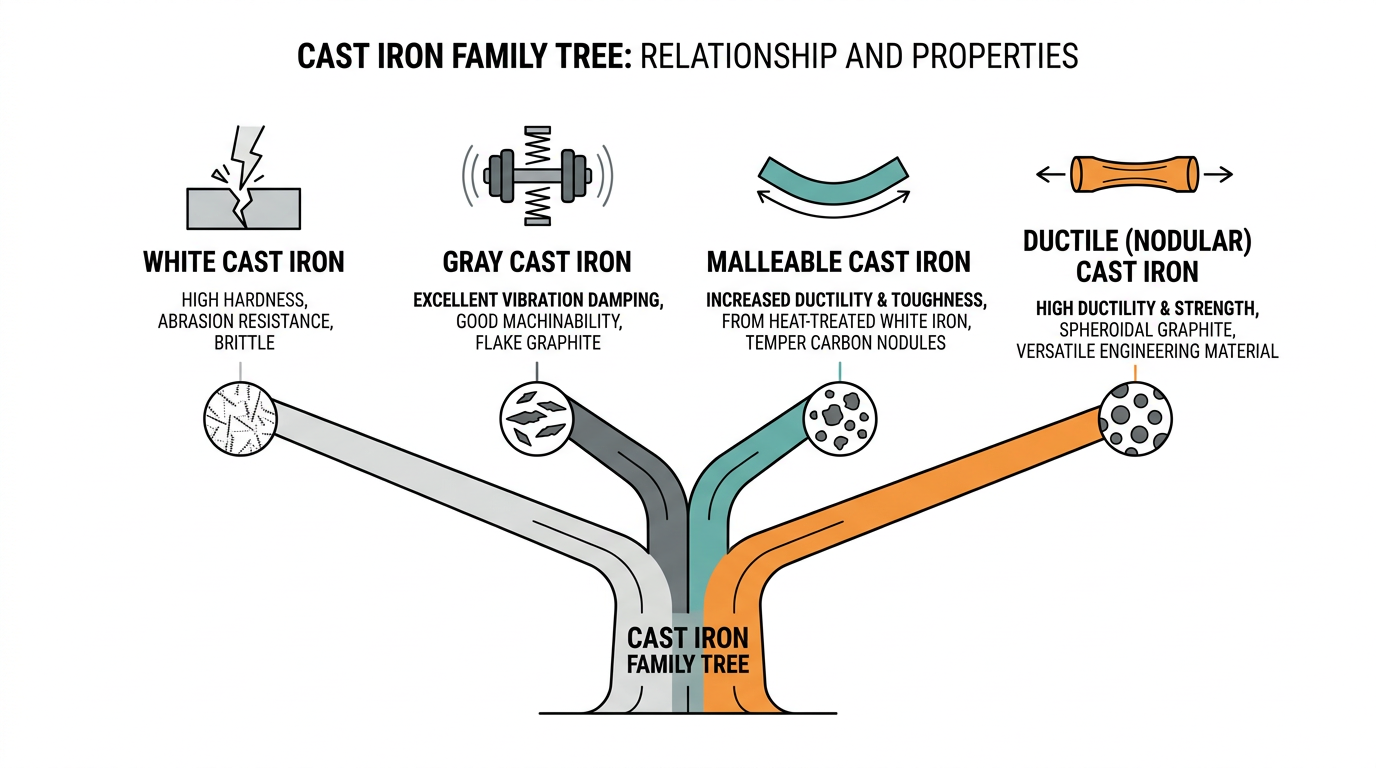
“Cast iron” and “gray iron” are not two different materials. Gray iron is one specific type within the cast iron family — the most common one, accounting for over 80% of total cast iron production. The confusion comes from decades of shop-floor shorthand where people say “cast iron” when they mean gray iron. That shorthand works in conversation. It fails on drawings and purchase orders, where specifying just “cast iron” leaves your foundry guessing which of four fundamentally different materials you actually need.
The cast iron family shares one defining trait: carbon content above 2%. What separates each member is what happens to that carbon during solidification — specifically, the shape the graphite takes as the metal cools. That single variable, graphite morphology, determines whether you get a material that damps vibration beautifully or one that handles impact loads like steel.
Gray Iron Is a Type of Cast Iron, Not a Different Material
Cast iron is a family name, not a material specification. The family includes gray iron, ductile iron, white iron, and malleable iron. All start from the same base alloy system — iron, carbon above 2%, and silicon — but each produces a radically different microstructure depending on how carbon precipitates during solidification.
Gray iron gets its name from the gray fracture surface created by flake graphite. These graphite flakes act as tiny internal cracks within the iron matrix. Picture potato chips glued together at a central point — that is essentially what the flake graphite network looks like under magnification. This structure is why gray iron excels at absorbing vibration and conducting heat, but fractures with almost no warning under tension or impact.
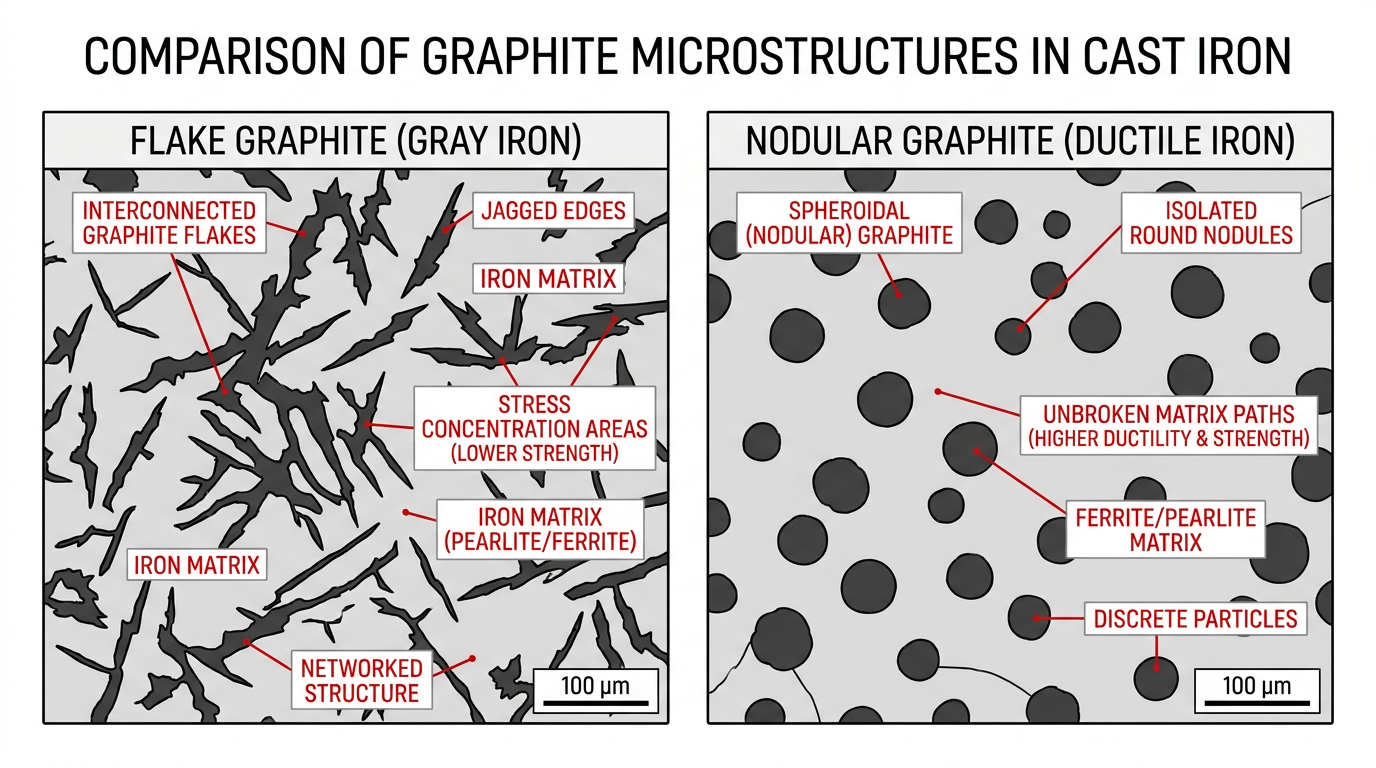
Ductile iron starts from nearly the same chemistry but receives a small magnesium addition (roughly 0.2%) just before pouring. That magnesium transforms the graphite from flakes into spheroids — nodules that distribute stress evenly instead of concentrating it. The result is a material with steel-like strength and measurable ductility, from essentially the same base alloy.
The microstructure tells the whole story. Every difference in mechanical behavior between cast iron types traces back to graphite shape.
How the Cast Iron Family Breaks Down
Gray Iron
Gray iron castings dominate because their flake graphite structure delivers three properties no other engineering metal matches simultaneously: vibration damping, thermal conductivity (46 W/m-K), and machinability. Gray iron machines smoothly and predictably — the graphite flakes act as a built-in chip breaker and lubricant.
The property most engineers overlook is gray iron’s compressive-to-tensile strength ratio. ASTM A48 Class 20 gray iron has a tensile strength of only 20 ksi (160 MPa), but its compressive strength reaches 83 ksi (570 MPa) — a 3.5:1 ratio. Engineers who compare cast iron types by tensile strength alone miss gray iron’s primary engineering advantage. Machine bases, engine blocks, and brake rotors all load primarily in compression, which is exactly where gray iron outperforms its own weight class.
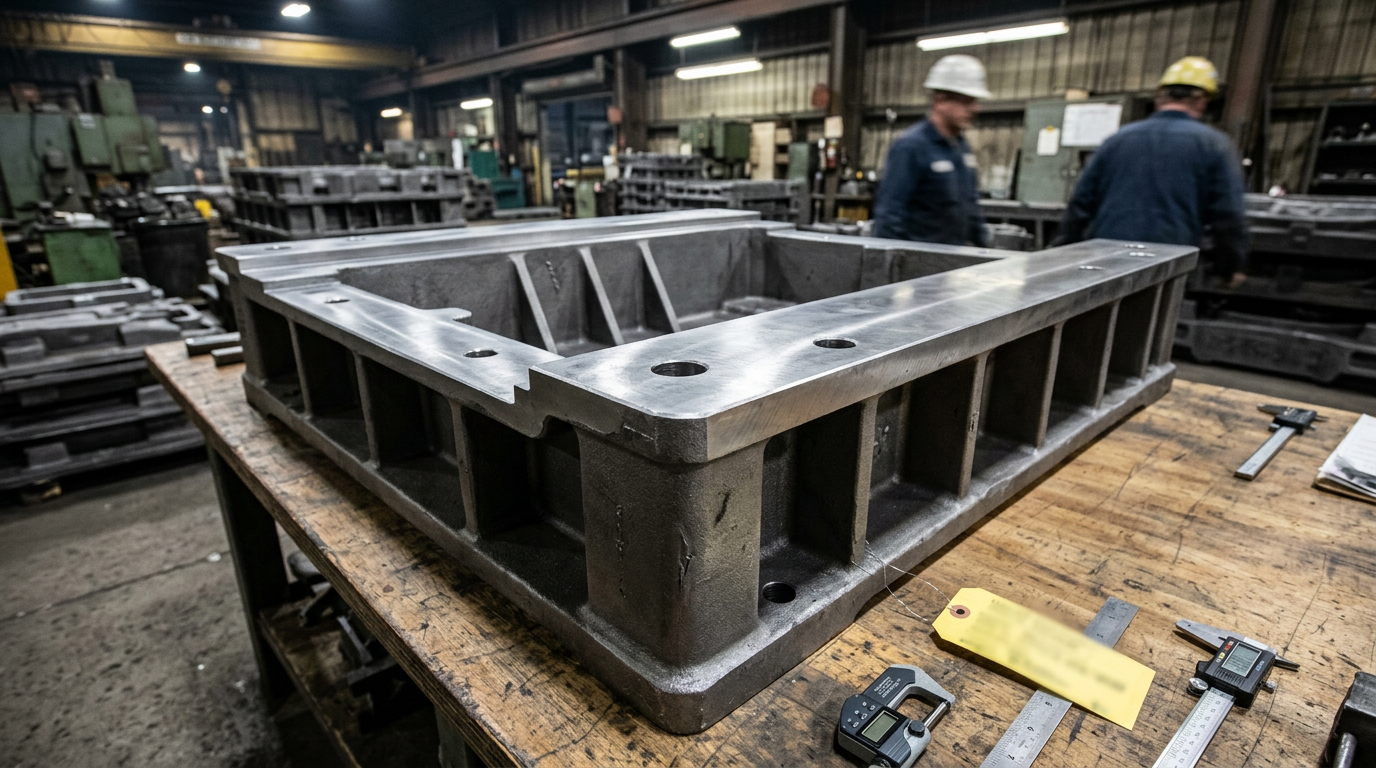
Gray iron has no measurable yield strength. It does not deform plastically before fracture. For any application involving significant tensile loads or impact, you need ductile iron.
Ductile Iron
Ductile iron — also called nodular iron or spheroidal graphite (SG) iron — bridges the gap between gray iron and steel. Minimum tensile strength reaches 60,000 psi with 40,000 psi yield strength, and certain grades achieve 18% elongation. Impact resistance is at least 7 ft-lbs versus roughly 2 for gray iron.
The catch is processing sensitivity. That magnesium addition must happen within a tight window, and the treated metal must be poured within 10 to 12 minutes before the magnesium fades. Miss that window, and you get gray iron properties in a part you specified as ductile. This is one reason ductile iron costs more — the process control requirements are much tighter.
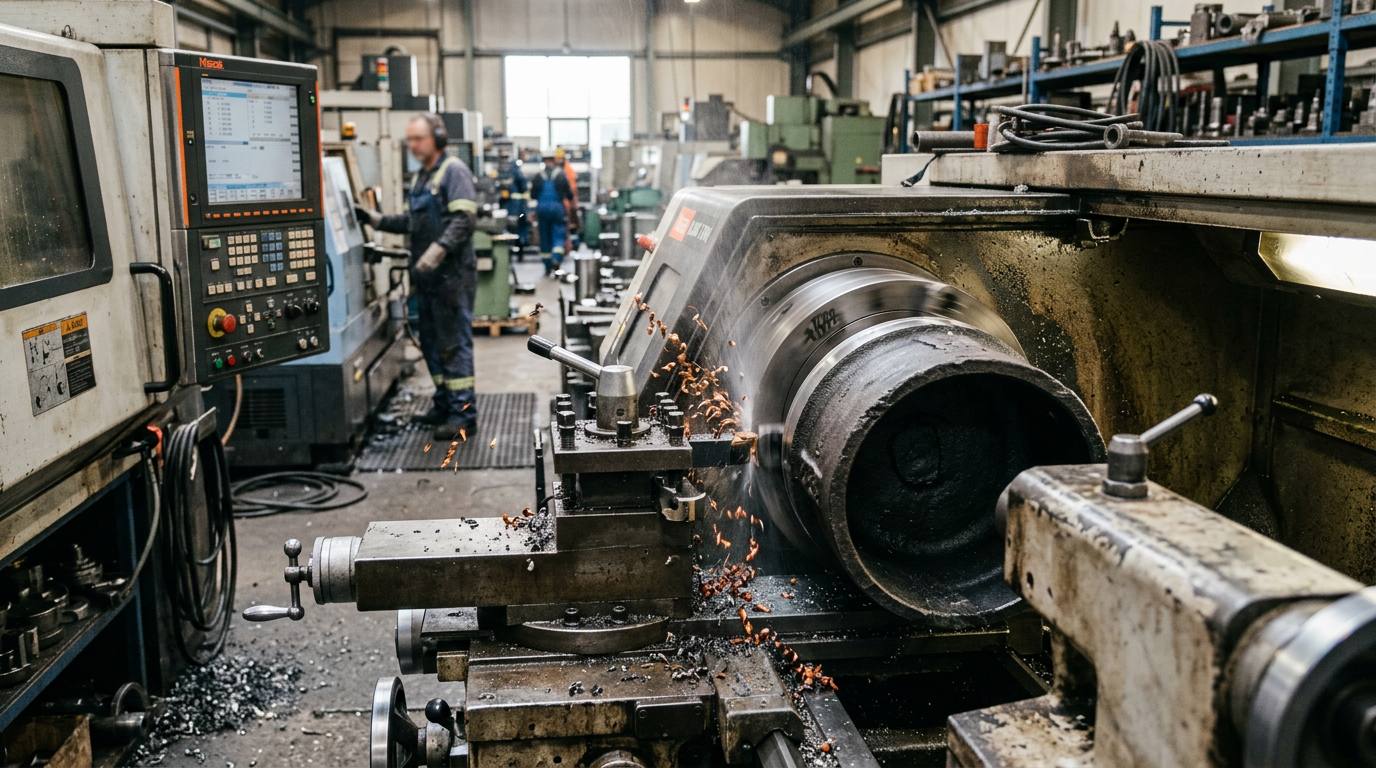
Ductile iron also creates unpredictable hard spots during machining, which can destroy carbide inserts without warning. I have seen shops reject entire batches of ductile castings because the hard spots made consistent machining impossible. When machinability is critical and the loads are compressive, gray iron is often the smarter choice.
White Iron and Malleable Iron
White iron forms when carbon stays locked in the iron matrix as iron carbide (cementite) instead of precipitating as graphite. Rapid cooling or specific alloy compositions suppress graphite formation entirely. The result is extremely hard, extremely brittle — and extremely wear-resistant. That brittleness, a fatal flaw in most contexts, becomes the defining advantage for mill liners, slurry pump components, and shot-blasting nozzles where abrasion resistance outweighs everything else.
Malleable iron starts as white iron, then undergoes a long heat treatment (often measured in days rather than hours) that decomposes the iron carbide into temper carbon nodules. The result is moderate ductility and good machinability, but the extended heat treatment makes malleable iron expensive. For most new designs, ductile iron has replaced it — same properties at lower cost and without the multi-day heat cycle.
Property Comparison Across the Cast Iron Family
Gray iron Class 30 and ductile iron 60-40-18 are the two grades engineers specify most often — here is how they stack up against white and malleable iron on the properties that drive material selection.
| Property | Gray Iron (Class 30) | Ductile Iron (60-40-18) | White Iron | Malleable Iron |
|---|---|---|---|---|
| Tensile Strength (ksi) | 30 | 60 | 25-50 | 50-70 |
| Yield Strength (ksi) | None measurable | 40 | N/A | 33-45 |
| Elongation (%) | <1 | 18 | <1 | 5-10 |
| Hardness (BHN) | 187-241 | 130-170 | 400-600 | 110-160 |
| Impact Resistance | Very low | Good (7+ ft-lbs) | Very low | Moderate |
| Machinability | Excellent | Good (hard spots) | Poor | Good |
| Vibration Damping | Excellent | Low | Very low | Low |
| Thermal Conductivity | High (46 W/m-K) | Moderate | Low | Moderate |
| ASTM Standard | A48 / A278 | A536 | A532 | A220 |
Before you specify the grade, understand the service conditions. A property table tells you what each material can do. Your application requirements tell you what it needs to do.
Why “Cast Iron” on a Drawing Is Not a Complete Specification
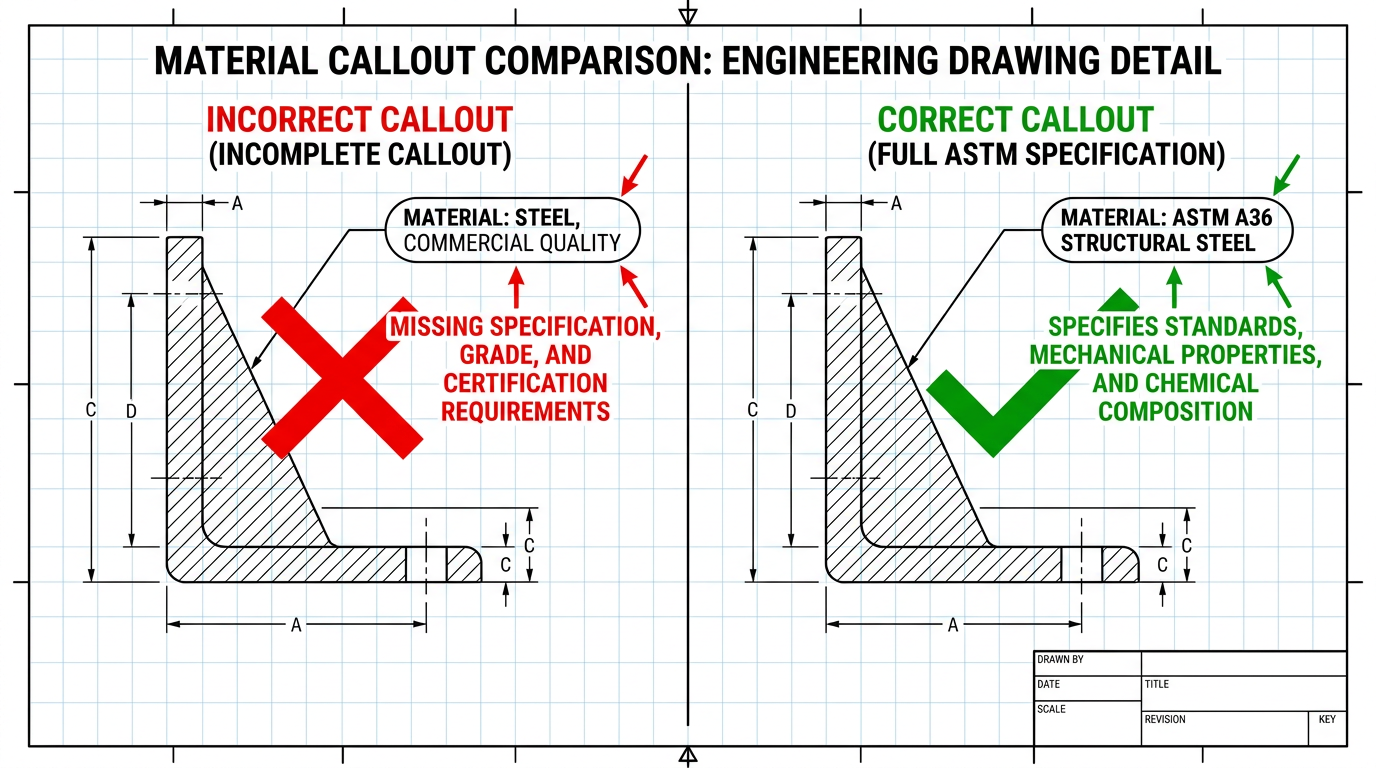
Writing “Material: Cast Iron” on a drawing is like writing “Material: Steel” — it narrows the universe but does not specify a material. I have seen purchase orders returned, parts rejected, and projects delayed because an engineer wrote “cast iron” and the foundry assumed gray iron while the application needed ductile.
Gray Iron: Specify by Class
Gray iron uses a class number system (ASTM A48 Class 20, 25, 30, 35, 40) where the number represents minimum tensile strength in ksi, tested on a standardized bar. The class system exists because gray iron is section-sensitive: the same alloy poured into a thin section cools faster and tests stronger than the same alloy in a thick section. You are specifying a test result, not an absolute material property.
A complete callout looks like this: ASTM A48, Class 30. Not “cast iron.” Not “gray iron.” The ASTM standard and class number together define exactly what the foundry needs to produce and what your incoming inspection should verify.
Ductile Iron: Specify by Absolute Properties
Ductile iron uses a three-part designation: 60-40-18 means 60 ksi tensile, 40 ksi yield, 18% elongation. Unlike gray iron, ductile iron properties are relatively consistent across section thicknesses, so absolute targets work.
The callout follows the same principle: ASTM A536, Grade 60-40-18. Every number means something. Every number is testable.
The ASTM spec gives you minimums, but here is what actually matters: match the specification system to the material behavior. Gray iron is section-sensitive, so specify by class. Ductile iron is section-stable, so specify by absolute properties. Getting this distinction right prevents the most common procurement errors I see in casting specifications.
The Bottom Line
Cast iron is a family. Gray iron is its most common member. The difference between them is taxonomic, not material — like asking the difference between “dog” and “Labrador.” Every type within the family shares the same iron-carbon base alloy, and the graphite morphology created during solidification determines all downstream properties.
The practical takeaway: never write “cast iron” as a material specification. Specify the type, the ASTM standard, and the grade. Three fields, ten seconds of effort, and you eliminate the most common source of casting procurement confusion entirely.