

Carbon Steel Casting
Custom, made-to-order carbon steel castings for demanding industrial applications. Fully compliant with ASTM standards and delivered Ready-To-Assemble.
Request a Free QuoteCustom Carbon Steel Castings with High Strength & Weldability
When ductile iron or gray iron cannot meet the structural demands of high-stress applications, carbon steel casting is the better choice. Our resin sand casting process produces heavy-duty carbon steel parts with strong tensile strength, ductility, and fatigue resistance.
At Kurt Foundry, we specialize exclusively in sand casting. This allows us to pour medium to large-scale carbon steel castings — fully custom and made to order — ranging from 1 kg to 1,000 kg (2 to 2,200 lbs), without the size limitations of investment casting or the high tooling costs of forging.
View Material GradesThe Kurt Foundry Carbon Steel Casting Process
Casting steel requires precise control over shrinkage and temperature. The Kurt Foundry team follows a systematic, 8-step process to keep internal structures sound and dimensions accurate on every custom order.

1. Pattern & Tooling Design
Every custom carbon steel casting starts with a precision pattern, built in-house to match your CAD drawing and account for machining allowance.
- Convert 2D/3D drawings into pattern geometry with correct draft angles
- Build wood or resin patterns, plus core boxes for internal cavities
- Add machining stock and shrinkage allowance per grade

2. DFM & Casting Simulation
Kurt Foundry engineers run casting simulation software to design optimal gating and riser systems, specifically combating carbon steel’s high shrinkage rate.
- Simulate mold filling and solidification to predict shrinkage porosity
- Optimize gate location, riser size, and chill placement
- Flag wall-thickness or geometry issues before tooling is cut

3. Resin Sand Molding
Our automated molding lines use high-grade resin sand, creating rigid molds that resist deformation during the high-temperature pour.
- Mix resin-bonded sand to the rigidity needed for steel-grade pours
- Compact cope and drag halves around the pattern
- Set cores and inspect mold cavities before closing

4. Spectrometer-Verified Pouring
At Kurt Foundry, molten carbon steel is analyzed via spectrometry before pouring to match ASTM A27 or A216 chemical composition requirements.
- Melt charge in electric arc/induction furnace to target chemistry
- Run spectrometer analysis and adjust alloy composition
- Pour at controlled temperature to fill molds fully before solidifying

5. Shakeout & Cooling
Castings are cooled under controlled conditions and separated from the sand mold, then cropped of gates and risers ahead of heat treatment.
- Control cooling rate to avoid cracking or warping
- Vibrate castings free of sand on the shakeout line
- Cut off gates, risers, and flash for reclamation

6. Heat Treatment
All carbon steel castings undergo in-house Normalizing and Tempering to relieve internal stresses, refine the grain structure, and improve machinability.
- Normalize to refine grain structure and even out hardness
- Temper to relieve internal stress from casting and cooling
- Verify hardness and mechanical properties against spec

7. CNC Machining
Finished castings are shot-blasted and machined on our 5-axis CNC centers to your final drawing tolerances, ready for immediate assembly.
- Shot-blast surfaces to remove scale and residual sand
- Mill, drill, bore, and turn to final drawing tolerances
- Apply surface finish or coating per customer spec

8. NDT & Final Inspection
Every custom carbon steel casting goes through NDT — MPI or UT — along with dimensional inspection before it ships.
- Run MPI/UT to check for surface and internal defects
- Verify critical dimensions with CMM or manual gauging
- Issue Material Test Report (MTR) and pack for export
Common Carbon Steel Casting Grades
The Kurt Foundry metallurgy lab controls chemical composition during the melting process. Below are the most common carbon steel casting grades we pour in-house.
| Standard / Grade | Tensile Strength (MPa) | Yield Strength (MPa) | Common Applications |
|---|---|---|---|
| ASTM A216 WCB | 485 – 655 | ≥ 250 | High-pressure valve bodies, pump casings, fittings. |
| ASTM A216 WCC | 485 – 655 | ≥ 275 | Similar to WCB but with higher yield strength for severe service. |
| ASTM A27 Grade 65-35 | ≥ 450 | ≥ 240 | General structural purpose castings, brackets, and gears. |
| ASTM A27 Grade 70-36 | ≥ 485 | ≥ 250 | Heavy machinery bases, mining equipment components. |
| DIN EN 10213 / 1.0619 | 450 – 600 | ≥ 240 | European standard equivalent for pressure-containing steel castings. |
Not sure which grade fits your part? Try our free Material Grade Advisor tool →
Carbon Steel Casting Applications
Kurt Foundry supplies fully machined, custom carbon steel castings to heavy industries across the USA and Canada.
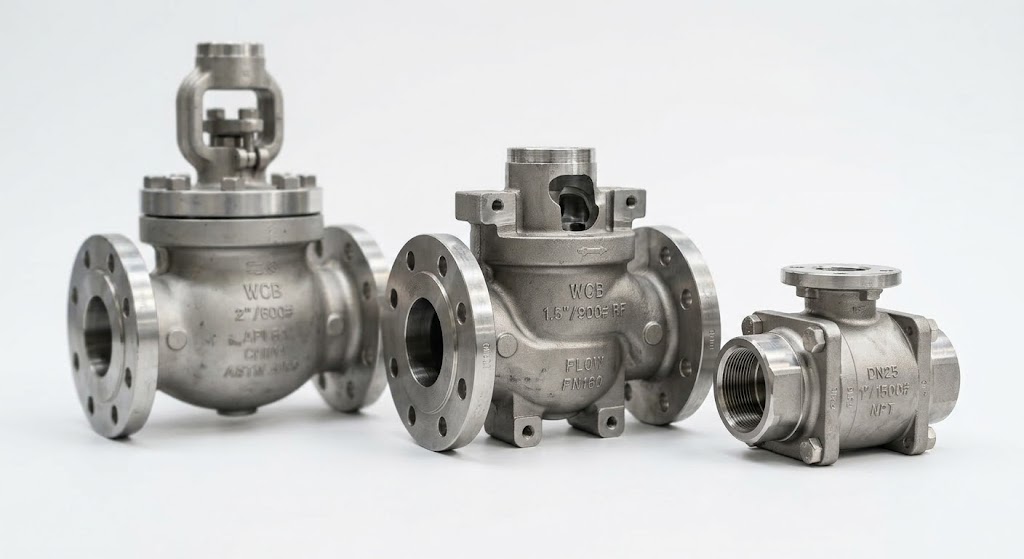
High-Pressure Valve Bodies
Manufactured using ASTM A216 WCB. Our carbon steel casting process allows for complex internal coring, ensuring leak-free performance in oil & gas pipelines.
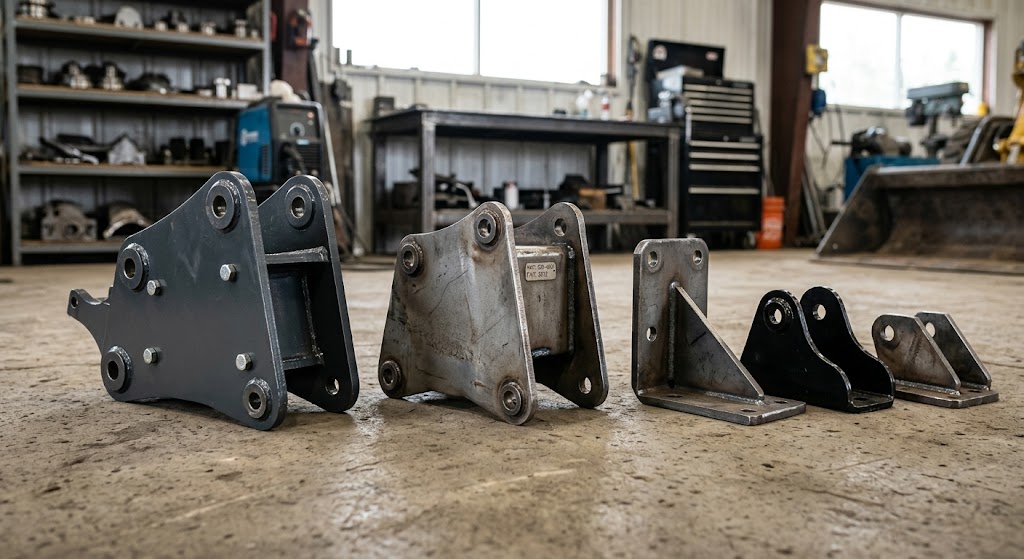
Construction Equipment Brackets
Using ASTM A27 Grade 70-36, we cast durable, custom load-bearing brackets rated for high structural stress and impact loads.
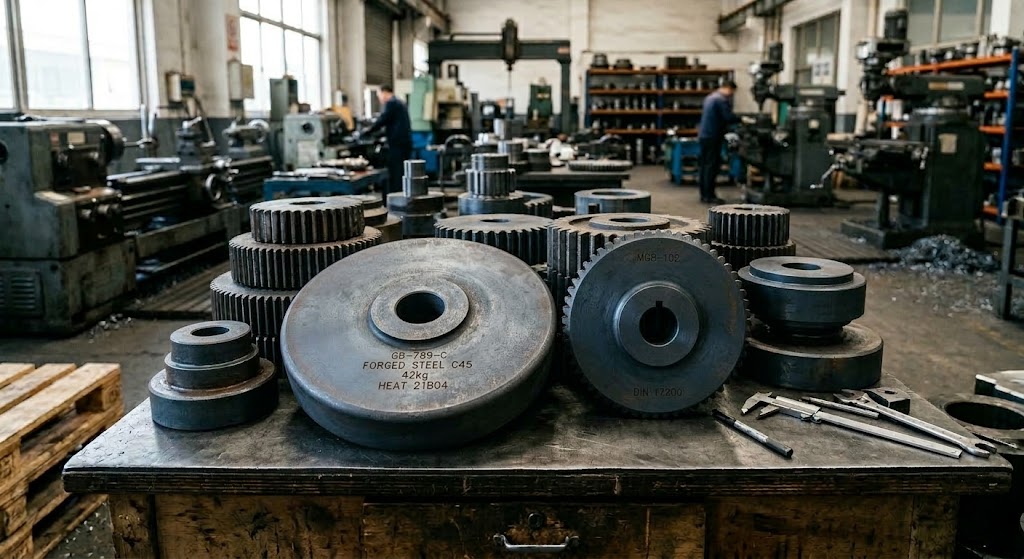
Industrial Gear Blanks
We supply carbon steel casting gear blanks made to order. Post-casting heat treatment improves machinability for the final gear cutting.

Pump & Compressor Housings
Made-to-order carbon steel casting for pump and compressor housings, machined to tight tolerances for reliable sealing under pressure.
Industries That Rely on This Material:
Our Foundry in Numbers
The equipment, output and certification behind every quote we send.
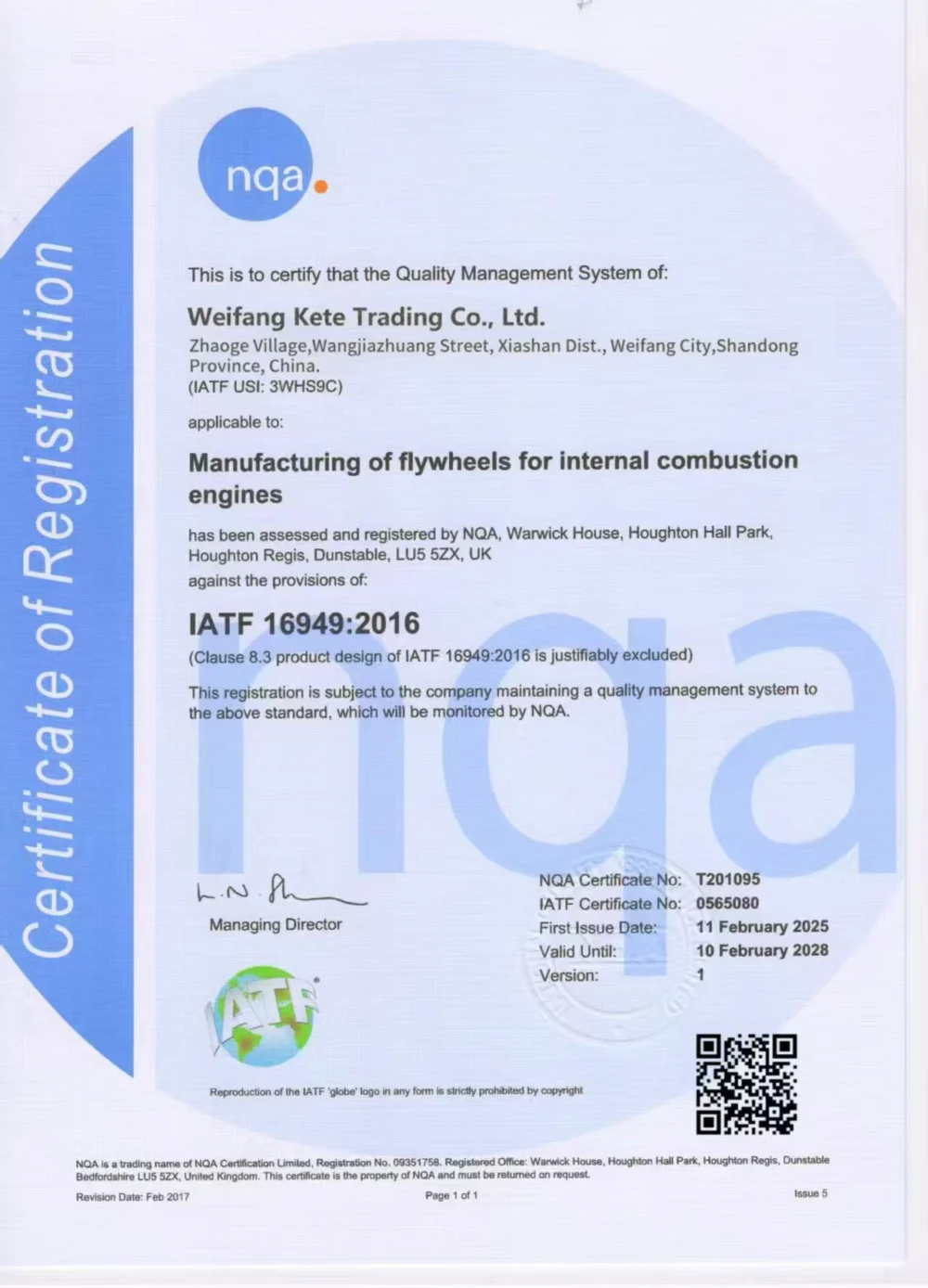
Featured Work: Engine Flywheels
Flywheels for internal combustion engines are the product line our IATF 16949 certification covers. We cast them in gray and ductile iron, then CNC machine and dynamically balance them in-house.
See our custom flywheels →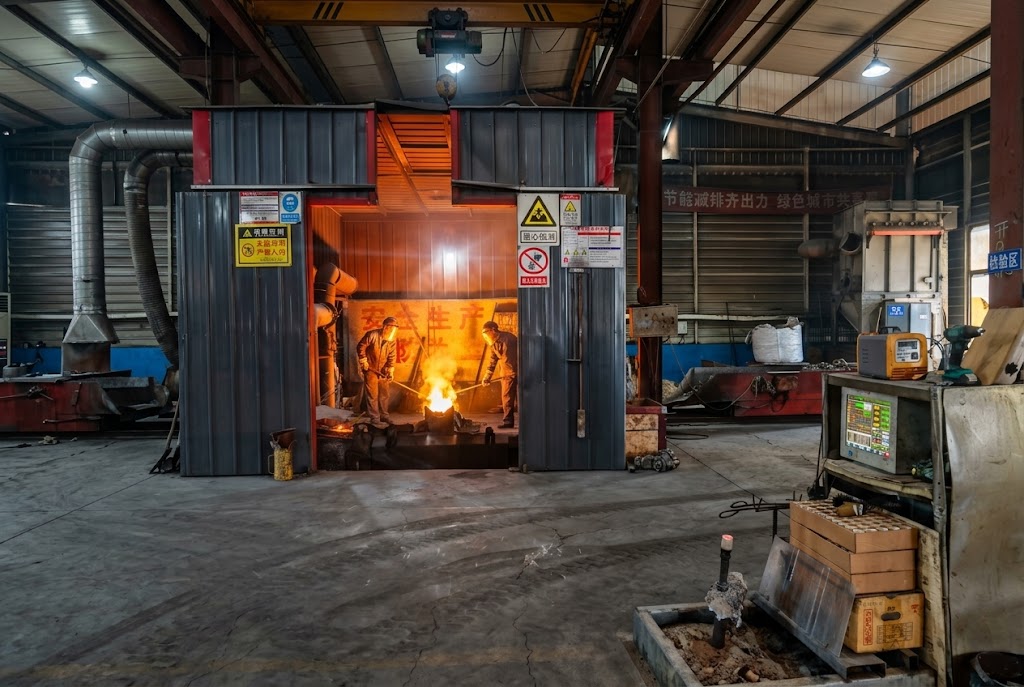
Why Choose Us for Your Carbon Steel Casting?
We operate a fully integrated facility. By keeping pattern making, pouring, heat treatment, and CNC machining under one roof, we eliminate supply chain delays and take full responsibility for the final tolerances of every custom, made-to-order carbon steel casting.
- Direct Factory Pricing – No Middlemen
- Custom & Made-to-Order, No Minimum Order Restrictions on Standard Patterns
- ISPM-15 Export Packaging for Rust-Free Ocean Transit
- Full Material Test Reports (MTRs) Provided
- Seamless DDP/FOB Logistics to North America
Carbon Steel Casting FAQs
Sand casting is more cost-effective for medium to large-sized heavy industrial parts. While investment casting offers tighter tolerances for tiny components, our automated resin sand casting lines hold good precision for carbon steel castings weighing from 1 kg up to 1,000 kg (2 to 2,200 lbs), with lower tooling costs.
At Kurt Foundry, our capabilities allow us to pour custom carbon steel castings ranging from 1 kg up to 1,000 kg (2 to 2,200 lbs) per single piece. We utilize both automated molding lines for higher volumes and floor molding for oversized structural components.
Yes. Every carbon steel casting we produce is custom and made to order from your 2D/3D drawing. We build the pattern in-house, run a DFM review, and quote based on your exact geometry, grade, and finishing requirements — no off-the-shelf catalog parts.
Carbon steel has a higher volumetric shrinkage rate than iron. Our engineering team uses 3D casting simulation software to design optimized gating and riser systems. Combined with strategic placement of chills in the resin sand molds, we ensure directional solidification that prevents internal shrinkage cavities and porosity.
Yes. For critical applications like pressure valves and load-bearing brackets, we offer in-house NDT services. This includes Magnetic Particle Inspection (MPI) for surface defects and Ultrasonic Testing (UT) to check the internal structural integrity of the casting before it leaves our facility.
Both are covered under ASTM A216 for high-temperature and pressure-containing parts. WCC has a slightly higher manganese and carbon limit, which yields higher tensile and yield strength compared to WCB. WCB is more common for standard industrial valves.
Yes, Kurt Foundry provides fully integrated manufacturing. We cast the carbon steel part and utilize our in-house 5-axis CNC machining centers to drill, mill, bore, and turn the casting so it is ready for immediate assembly upon delivery to your facility.
Ready to Quote Your Carbon Steel Casting Project?
Send us your 2D/3D CAD drawings. Our foundry engineers will provide a DFM review and a competitive B2B quote within 48 hours.
Get Your Free Quote Now