
Two foundries can read the same drawing and quote different parts. The difference is not in the drawing — it’s in the three fields the RFQ left blank.
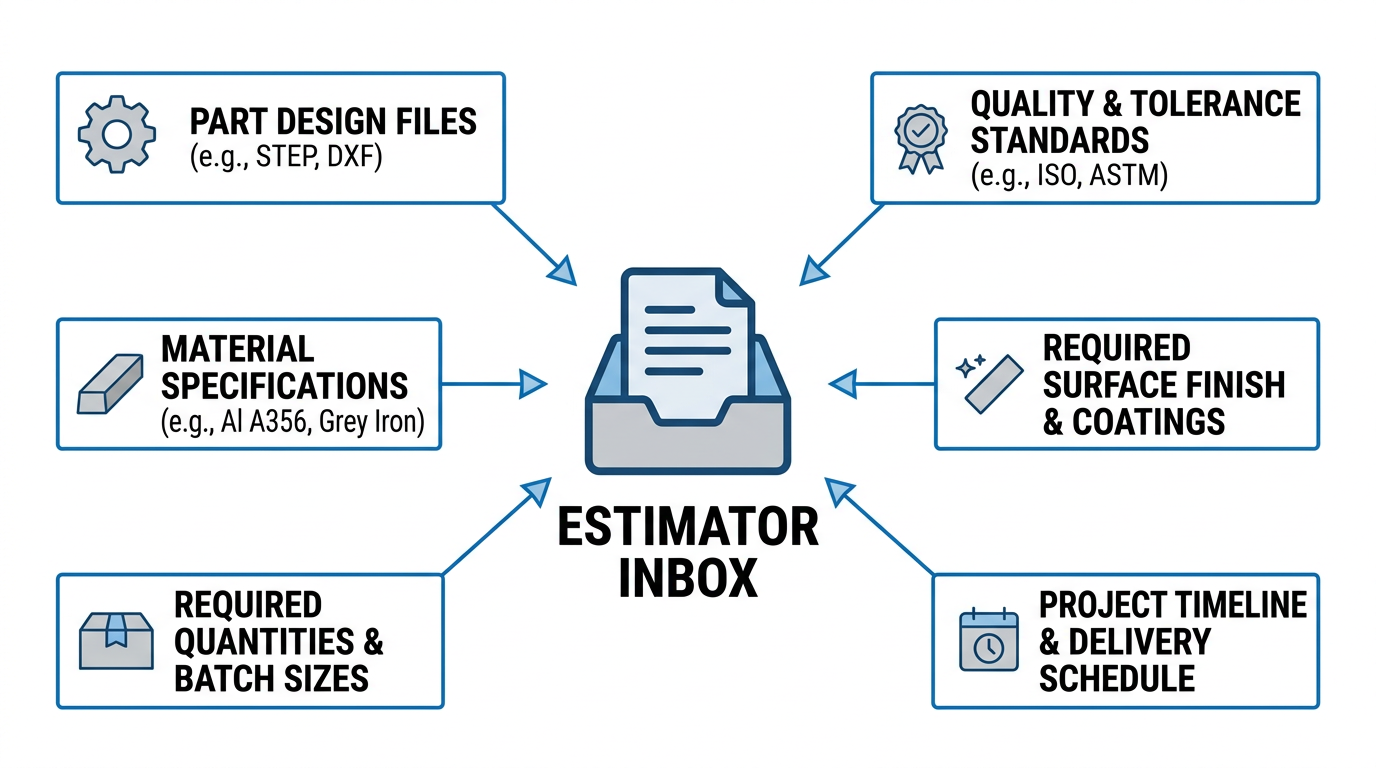
When your RFQ hits our inbox, the drawing is one of six inputs we need to land a quotable number on the first pass. Industry observations suggest estimators capture about 60% of data points from a complex drawing on a single read, and the missing 40% drives roughly half the total RFQ processing time.
This packet walks each field a sand casting estimator opens, ordered by how much it moves the quote when missing.
The Drawing Is One Input, Not the Whole RFQ
A sand casting RFQ is six categories of decisions, and the drawing covers exactly one of them. The Forging Industry Association template uses six groups, which adapts for casting into six required fields.
Required: part description with drawing + revision + units, material grade with heat-treat condition, quantity with revision frequency, tolerance and surface finish callouts, inspection acceptance, and delivery terms. Packaging crate dimensions and certificate-of-conformance format are nice-to-have. With those six required categories filled in, an estimator can quote without a callback.
Specify Material Grade With Heat-Treat Condition
The most common gap I see in incoming RFQs is material grade without a heat-treat condition. “ASTM A536” alone could mean grade 60-40-18 annealed (180 HBN, ductile) or grade 100-70-03 as-cast (240 HBN, higher tensile).
The per-part price moves meaningfully between them. “ASTM A216” without WCA/WCB/WCC leaves the normalize-and-temper cycle unpriced.
Paste-ready wording for the material line:
Material: ASTM A536 grade 65-45-12, annealed per supplier standard practice. Hardness: 156-217 HBN per ASTM E10.
That single line replaces three back-and-forth emails. The same template works for carbon steel (ASTM A216 WCB, normalized and tempered), stainless (ASTM A351 CF8M, solution annealed), and gray iron (ASTM A48 Class 30, as-cast).
Gating, risering, and machining stock can push raw material to twice the finished part weight — yield differs by grade.
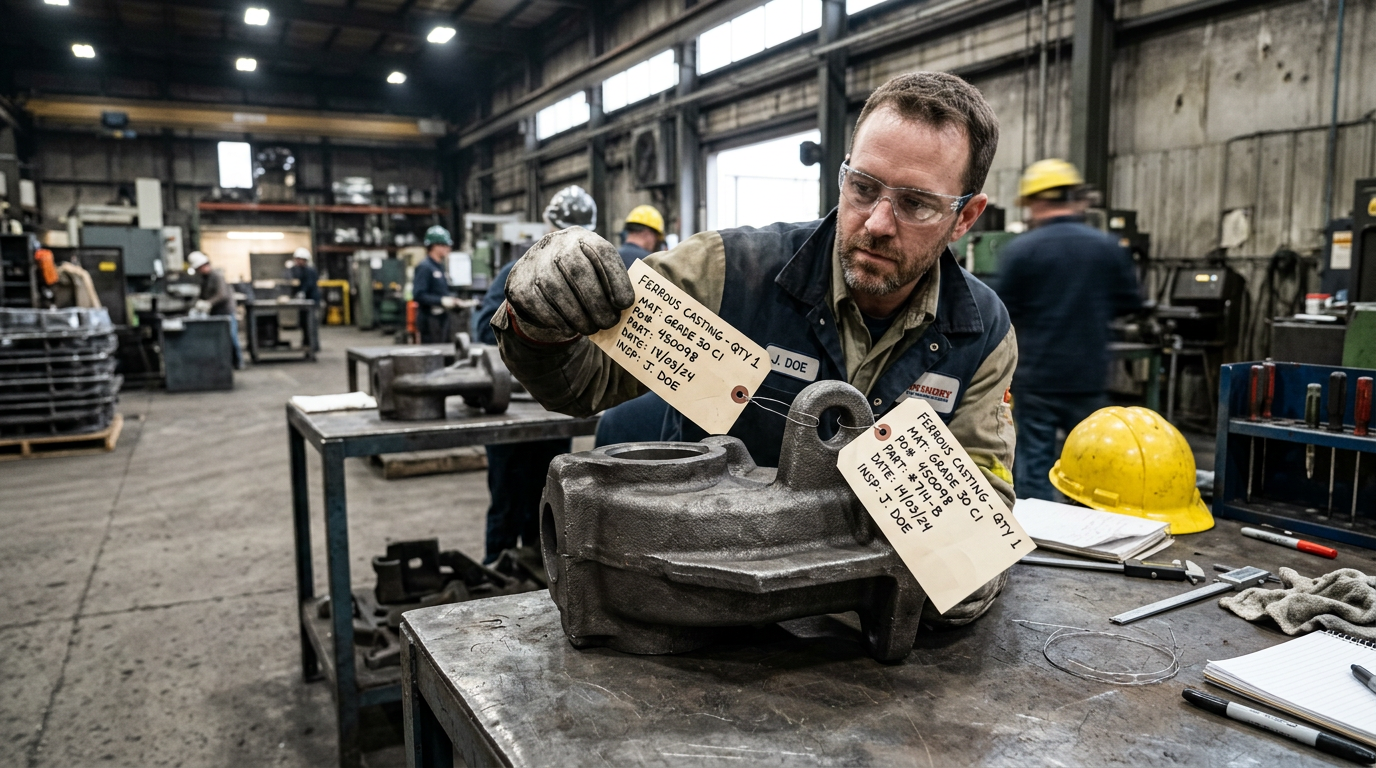
State Quantity and Revision Frequency on the RFQ
Quantity alone undersells what the estimator needs. A one-time prototype of 50 pieces, a 50-piece annual repeat, and a 50-piece monthly draw are three different cost cases — the unit price moves up to 40% between them.
The cost-driver mix flips. At prototype volume, setup cost dominates — pattern setup, sand mix change, and ladle prep run 30-50% of total cost on small lots. At annual repeat, tooling amortization takes over as pattern lifespan spreads across campaigns.
Brian Rapoza of Boothroyd Dewhurst notes that at low volumes labor can exceed material cost. Inflating annual numbers to fish for a better unit price breaks the math both ways.
Paste-ready wording for the quantity line:
Quantity: 50 pieces, one-time prototype build. Annual demand estimated 200-300 pieces, contingent on field validation.
Quantity also drives which method makes economic sense — green sand below 200 pieces, no-bake above — with the cost comparison of sand casting methods showing the spread by volume.
Call Out Sand Casting Tolerance and Surface Finish in Spec Language
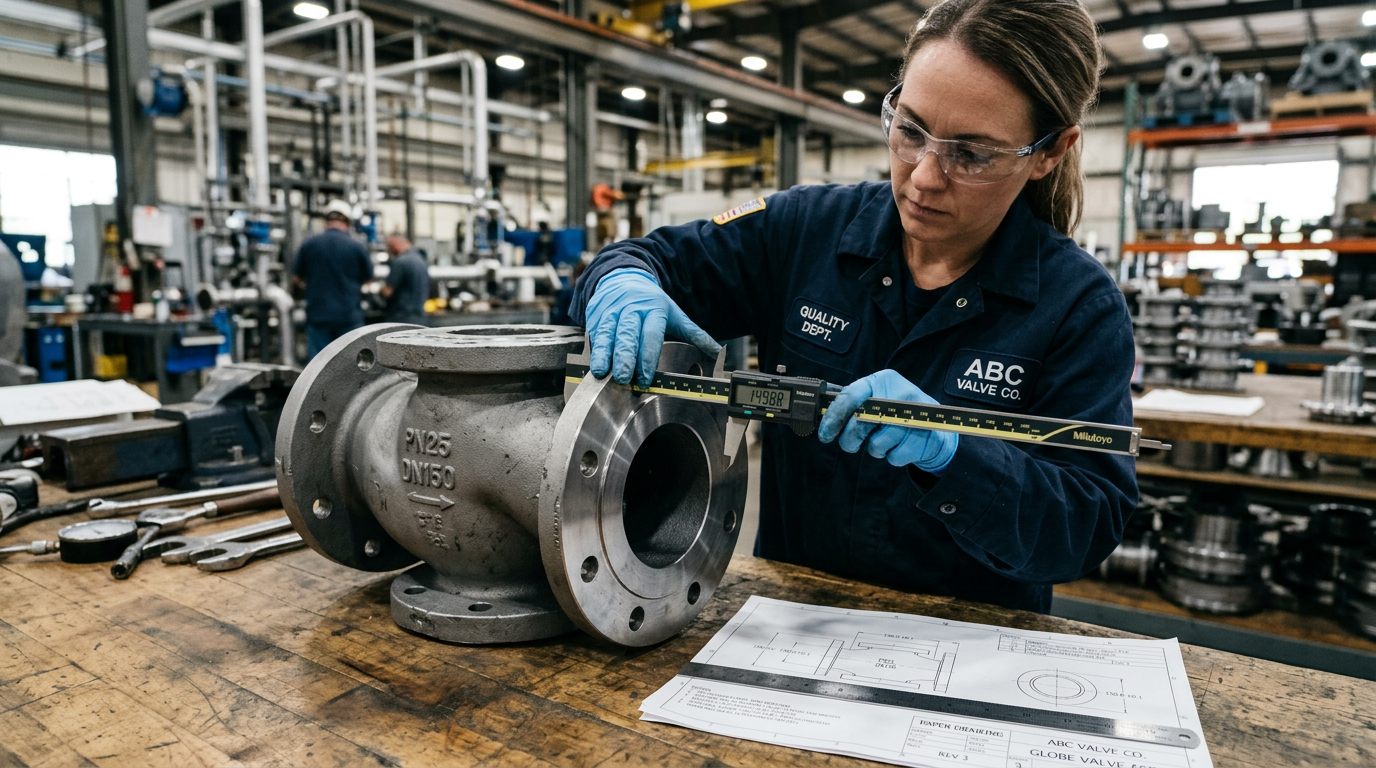
“Standard tolerance” means different things at different foundries, and the estimator silently picks the loosest interpretation when the RFQ doesn’t pin it down. Use ISO 8062 CT-grade callouts: hand molding reaches CT8 to CT10, machine and automatic molding can hit CT9. Anything tighter than CT8 requires post-cast machining as a separate line item.
Paste-ready wording for the tolerance line:
Tolerance: ISO 8062-3 CT9 as-cast, ±0.25 mm machined. Surface finish: Ra 12.5 µm as-cast, Ra 3.2 µm machined, per ASME B46.1.
A valve body might be specified as ASTM A216 WCB cast to CT10 and CNC-finished on the flange face to Ra 3.2 — that tells the estimator where the machining stock allowance applies. CT9 lands near ±1.4 mm on a 100 mm feature; sand casting tolerances by process type maps CT grade to mm across molding methods.
Define Sand Casting Inspection Acceptance Criteria
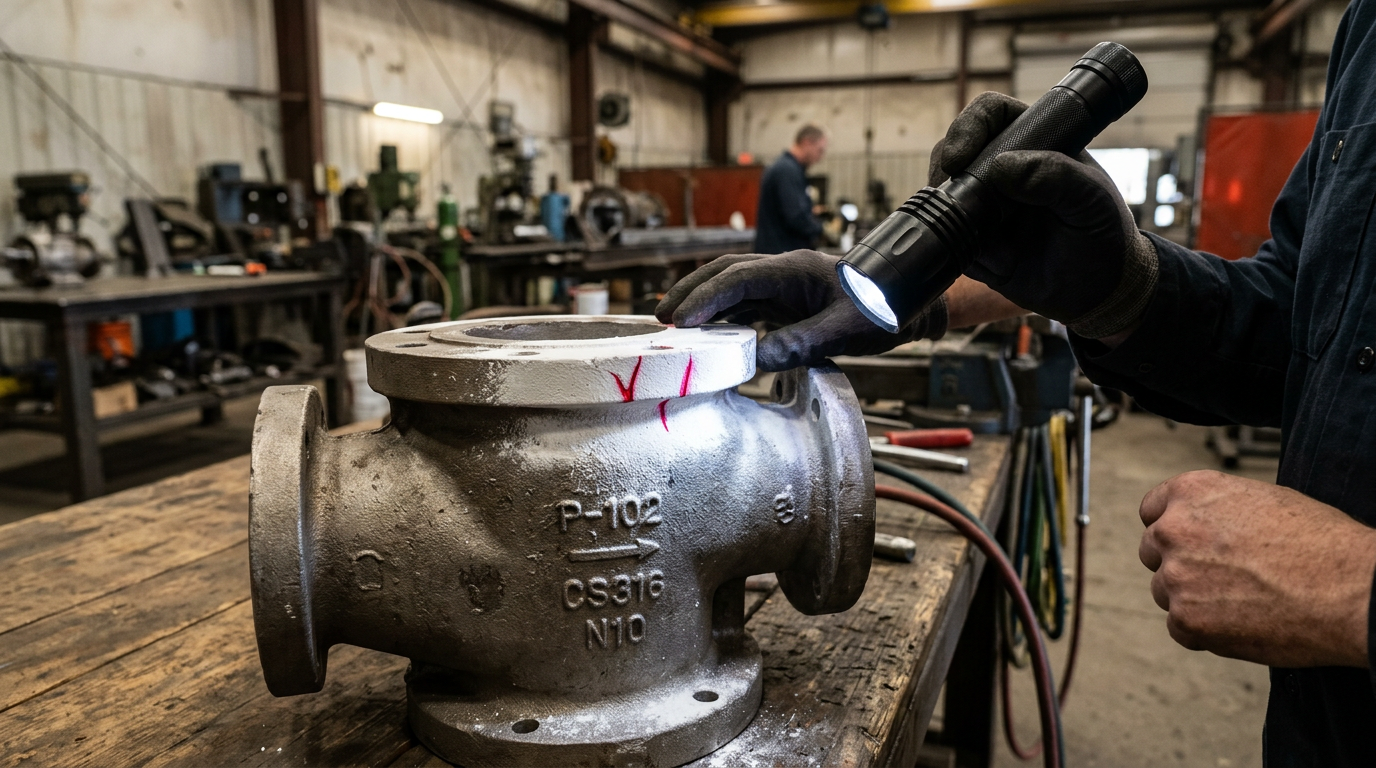
Inspection is the third field that quietly breaks apples-to-apples comparison. “Standard inspection” is a phrase, not a specification.
One foundry might price visual-only per MSS-SP-55. Another assumes ASTM E165 dye penetrant on critical surfaces. Those plans differ by hundreds of dollars per part on small lots.
Name the standard, the zone, and the acceptance level. Flag Critical-to-Quality (CTQ) features only on dimensions where fit, sealing, alignment, or function fails if the dimension drifts — typically mating faces, sealing grooves, and shaft-bore concentricities. Once CTQs are flagged, the verification method can be defined before quote freeze.
Paste-ready wording for the inspection line:
Inspection — visual per MSS-SP-55, dye penetrant ASTM E165 on flange face and seat zones, AQL 1.5 sampling per ANSI/ASQ Z1.4, First Article Inspection per AS9102.
Sand casting acceptance criteria mapped to ASTM standards covers visual, dimensional, and NDT zones in paste-ready format.
Include Delivery, Packaging, and RFQ Revision Terms
The last block is what arrives with the casting. Freight terms alone can flip which supplier is cheapest — compare Ex Works against FOB destination with built-in freight allowance before reading the unit-price column.
Paste-ready wording for the delivery line:
Delivery — buyer’s dock, 14 weeks after pattern approval; freight FOB shipping point, buyer’s carrier; packaging wooden crate with individual VCI bag; drawing revision Rev C dated [YYYY-MM-DD], supersedes prior.
The revision line matters because the most expensive RFQ failure is the foundry quoting Rev A while the buyer expected Rev C.
Next Steps
Run the six-field check before you send. Confirm drawing with revision, material grade with heat-treat condition, quantity with revision frequency, ISO 8062 CT-grade tolerance, inspection acceptance with named ASTM standards, and delivery terms.
A 15% or more spread between foundry quotes for the same packet is almost always a sign the specs were different. Material grade, inspection acceptance, and quantity-with-rev-frequency are the three fields that go missing most often. Send the complete packet to Kurt Foundry’s DFM team for line-item pricing within 5 business days.